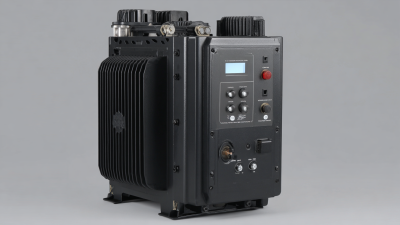
You know, in the fast-changing world of industrial automation, staying on top of new tech is a total game-changer. It’s really about making things run smoother, longer-lasting, and way more efficient. One thing that’s been catching a lot of attention lately is the Power Electronics Soft Starter. Seriously, this little gadget has become pretty popular across industries because of how much it helps control motors better. I read somewhere that the global market for soft starters is expected to hit around USD 2.6 billion by 2026 — mainly because everyone’s looking for energy-saving solutions and ways to cut down operational costs when dealing with motor systems.
What’s really cool about these soft starters is the list of benefits they bring to the table. They give you more control over how motors start up, which means less mechanical stress and fewer electrical surges. Basically, instead of jamming the motor at full blast right away, these devices gradually increase the voltage. That makes the motor accelerate more smoothly and decelerate gently too, which, let’s be honest, helps prevent wear and tear on the machinery over time. Plus, according to the International Electrotechnical Commission, using soft starters can cut energy use by up to 30%! That means lower bills and a smaller carbon footprint—a win-win, right?
As industries become more focused on boosting efficiency and reliability, it’s pretty clear that Power Electronics Soft Starters are a smart move. They do more than just control motors; they’re a key part of meeting modern manufacturing challenges and keeping energy management on point. Honestly, adopting this tech is like giving your equipment a little upgrade to stay ahead of the game.

Overview of Power Electronics Soft Starters in Motor Control
Power electronics soft starters are essential devices used in motor control systems to facilitate the smooth startup of electric motors. By gradually increasing the voltage supplied to a motor, these soft starters minimize mechanical stress and reduce the risk of equipment damage during the initial startup phase. This controlled ramp-up in voltage helps in lowering inrush currents that can lead to power surges, thereby providing a more stable operating environment. The technology is especially advantageous in applications where sudden energy demands could disrupt operations or lead to equipment failure.
In addition to protecting motors, power electronics soft starters enhance energy efficiency by optimizing the power consumption during startup. This not only prolongs the lifespan of the motor by reducing wear and tear but also leads to lower operational costs. These devices come equipped with features that allow for precise control over start and stop sequences, ensuring a smooth transition during motor operations. Moreover, their compact design and ease of integration make them a preferred choice for modern automation systems, enabling industries to achieve higher levels of productivity while maintaining safety and reliability in their motor-driven applications.
Key Features of Power Electronics Soft Starters
Power electronics soft starters have become an
essential component in motor control applications due to their innovative features that enhance performance and efficiency.
One of the key features of these starters is their ability to control the voltage applied to the motor during the startup phase.
By gradually ramping up the voltage, soft starters limit inrush current, reducing mechanical stress on the motor and associated equipment.
According to a report by the International Electrotechnical Commission, it is estimated that implementing soft starters can reduce starting current by up to 50%,
which not only protects the motor but also decreases the potential for electrical disturbances in the supply network.
Another significant feature of power electronics soft starters is their integrated control functions, which provide greater flexibility in application.
With advanced microcontroller technology, these soft starters can be programmed for various startup profiles, including torque control and soft stop functions.
This adaptability is crucial in industrial settings, where different operational demands must be met.
A study published by the National Institute of Standards and Technology highlighted that industries utilizing soft starters have reported a
30% increase in operational efficiency due to optimized motor control and reduced downtime.
These enhancements not only lead to significant energy savings but also contribute to longer lifespan of equipment, making soft starters a wise investment for modern motor control systems.
Advantages of Soft Starters Over Traditional Direct-On-Line Starters
Soft starters have gained traction in motor control applications due to their ability to offer significant advantages over traditional direct-on-line (DOL) starters. One of the primary benefits of soft starters is their capability to reduce inrush current during motor startup. DOL starters can generate a surge of current that is often six to ten times higher than the motor's full-load current. According to a report by the Electric Power Research Institute (EPRI), this high inrush current can lead to voltage dips in the electrical network, causing stress on both the motor and other equipment, potentially resulting in costly downtime.
In addition to mitigating inrush current, soft starters contribute to improved energy efficiency during startup operations. By gradually ramping up the motor voltage, they minimize mechanical stress on components, which can extend equipment life and reduce maintenance costs. The International Electrotechnical Commission estimated that proper use of soft starters can lead to energy savings of up to 40% during startup phases, translating to lower operational costs over time. Furthermore, soft starters can offer enhanced control features, such as adjustable acceleration and deceleration times, which help in optimizing performance based on specific application requirements, promoting smoother operations and reducing wear and tear on mechanical systems.
Improved Motor Life and Performance with Soft Starters
Soft starters play a crucial role in enhancing the lifespan and performance of electric motors, addressing several operational challenges that arise during motor startups. One of the primary benefits of using soft starters is their ability to reduce inrush current, which can be several times higher than the motor's rated current. By gradually ramping up the voltage and current, soft starters provide a controlled startup process that minimizes the mechanical stress on the motor and the associated components, such as belts and gears. This controlled operation leads to a significant reduction in wear and tear, ultimately extending the motor's lifespan and improving its reliability.
Moreover, soft starters contribute to better performance by ensuring a smoother acceleration process. This gradual increase in speed not only enhances the operational efficiency of the motor but also improves the overall system performance. For instance, applications that require precise control over motion benefit greatly from the soft start feature, which allows for accurate speed adjustments and reduces the likelihood of stalling. As a result, soft starters facilitate improved torque management and enhance the motor's ability to handle various load conditions, making them an essential tool for optimizing motor control and longevity in a range of industrial applications.
Energy Efficiency Benefits of Using Soft Starters
Utilizing power electronics soft starters for motor control significantly enhances energy efficiency, making these devices an excellent choice for industrial applications. Reports indicate that soft starters can reduce energy consumption during motor startup by up to 40%, contributing to lower operating costs. This reduction is primarily due to the gradual ramp-up of the motor's speed, which minimizes the initial inrush current that typically spikes during traditional startup methods. By curtailing these surges, soft starters not only save energy but also extend the lifespan of the motor and connected equipment.
Tip: When selecting a soft starter, consider the starting current limitations of your specific motor to maximize energy efficiency and performance. Additionally, proper sizing of the device ensures optimal operation without risking damage or excessive wear.
The integration of soft starters not only enhances energy savings but also aligns with sustainability initiatives. According to the U.S. Department of Energy, motors consume approximately 60% of the total industrial electricity, so implementing soft starters can have a profound impact on overall energy consumption in factories and plants. As industries strive for greener practices, the shift towards devices that promote energy efficiency, such as soft starters, is more imperative than ever.
Tip: Regularly monitor and maintain your soft starter and motor systems to ensure they operate at peak efficiency, thereby sustaining energy savings over time.
Reduced Mechanical Stress and Maintenance Costs
The implementation of power electronics soft starters in motor control systems plays a pivotal role in reducing mechanical stress and lowering maintenance costs. According to a report by the International Energy Agency, soft starters can effectively decrease the inrush current during motor startup by up to 70%. This reduction in inrush current translates directly to a decrease in mechanical stress on motor components and connected equipment. Consequently, operators can expect a significant enhancement in the overall longevity of machinery, which is crucial in industries where equipment downtime can be costly and disruptive.
Furthermore, the reduced mechanical stress achieved through soft starters leads to lower maintenance costs associated with repairing or replacing damaged parts. The Electric Power Research Institute has identified that motors equipped with soft starters require up to 50% less maintenance compared to traditional starting methods. With fewer wear-and-tear issues arising from harsh startup conditions, companies can not only save on direct repair costs but also benefit from increased operational efficiency and reliability. This strategic shift not only bolsters the longevity of motors but also allows businesses to allocate resources more effectively, investing in innovation rather than ongoing maintenance challenges.
Applications of Soft Starters in Various Industries
Soft starters play a crucial role across various industries by controlling the inrush currents of electric motors during startup. This innovative technology is widely applied in sectors such as manufacturing, HVAC, and water treatment, which collectively account for over 50% of global energy consumption, according to recent industry reports. For instance, in the manufacturing sector, soft starters facilitate smoother operations by minimizing mechanical stress on equipment, which extends the lifespan of machinery and reduces maintenance costs. This is particularly important in assembly lines where consistency and reliability are paramount.
In the HVAC industry, soft starters are utilized to enhance the efficiency of compressors and fans, leading to a decrease in energy usage by approximately 20%, as noted in studies conducted by energy research organizations. These energy savings are vital, especially as governments and businesses strive to meet increasingly stringent energy efficiency regulations. Moreover, in water treatment facilities, incorporating soft starters can lead to improved system reliability by reducing the likelihood of water hammer effects, which can cause significant damage to plumbing systems. Such applications highlight the integral role of soft starters in enhancing efficiency and reliability across diverse sectors.
Top 10 Benefits of Using Power Electronics Soft Starters for Motor Control
| Benefit |
Description |
Industry Applications |
| Reduced Inrush Current |
Soft starters limit the inrush current during motor startup, protecting electrical systems. |
Manufacturing, HVAC |
| Enhanced Motor Life |
Gradual acceleration reduces mechanical stress, resulting in longer motor lifespan. |
Mining, Agriculture |
| Soft Start Capability |
Allows a smooth start with reduced torque, minimizing system shocks. |
Pumps, Fans |
| Reduced Vibration |
Less mechanical vibration during startup leads to quieter operation. |
Textiles, Food Processing |
| Energy Efficiency |
Optimizes energy consumption during startup, contributing to lower operational costs. |
Water Treatment, Automotive |
| Protection Features |
Includes overload, phase failure, and over temperature protections. |
Oil & Gas, Chemical |
| Compact Design |
Designed for space-saving installations while maintaining efficient performance. |
Logistics, Material Handling |
| Remote Monitoring |
Allows operators to monitor performance remotely, enhancing control and maintenance. |
Automation, Smart Manufacturing |
| Easy Integration |
Easily integrates with existing systems and can be configured with minimal effort. |
Construction, Renewable Energy |
| Cost Savings |
Offers long-term savings through lowered repair costs and reduced downtime. |
All Industries |
Revolutionizing Motor Control: Insights from Industry Reports on the 6600 Series 4 Bypass Intelligent Motor Soft Starter
The evolution of motor control technology is making significant strides, particularly with the introduction of advanced soft starters. The 6600 Series 4 Bypass Intelligent Motor Soft Starter exemplifies this technological advancement, offering unparalleled control over motor acceleration and deceleration. By incorporating a new generation of soft start technology, it enables adaptive control that finely tunes the acceleration curve and deceleration curve of the motor, ensuring smoother and more efficient operation.
This innovative approach not only enhances motor performance but also reduces mechanical stress, extending the life of both the motor and the connected equipment. With the ability to finely adjust the control parameters, users can optimize their operations for various applications, boosting overall productivity. As industrial demands continue to rise, solutions like the 6600 soft starter stand out by providing flexibility and reliability, allowing for seamless integration into a wide range of environments.
In addition to performance improvement, the intelligent control features of this soft starter contribute to energy savings and operational efficiency. By minimizing the inrush current during start-up and ensuring a gradual ramp-up to full speed, it mitigates energy spikes and promotes a sustainable approach to motor management. As industries look to innovate, the adoption of such cutting-edge technology is essential for staying competitive and achieving operational excellence.
FAQS
: Power electronics soft starters are primarily used in motor control applications to manage the inrush currents during startup, thereby protecting the motor and associated equipment.
Soft starters gradually ramp up the voltage applied to a motor, which limits inrush current and reduces mechanical stress, ultimately enhancing motor performance and extending its lifespan.
Implementing soft starters can reduce starting current by up to 50%, leading to a reported 30% increase in operational efficiency due to optimized motor control and reduced downtime in industrial settings.
Soft starters are widely used in industries such as manufacturing, HVAC, and water treatment, where they help manage energy consumption and improve operational efficiency.
In the HVAC industry, soft starters can enhance the efficiency of compressors and fans, leading to energy savings of approximately 20%.
Soft starters facilitate smoother operations in manufacturing by minimizing mechanical stress on equipment, which not only extends machinery lifespan but also reduces maintenance costs.
By controlling inrush currents, soft starters reduce the likelihood of water hammer effects in water treatment systems, which can significantly damage plumbing infrastructure.
Yes, soft starters can be programmed for various startup profiles, including torque control and soft stop functions, providing greater flexibility for different operational demands.
Soft starters contribute to significant energy savings, improved system reliability, and longer equipment lifespan, making them a valuable investment in motor control technology.
They offer advanced control features and flexibility that enhance performance and efficiency across multiple industries, addressing the growing need for energy efficiency and operational reliability.
Conclusion
Power Electronics Soft Starters are increasingly recognized for their role in enhancing motor control across various industries. These devices provide a smooth start-up by gradually increasing voltage, which helps to minimize inrush currents and protect the motor from mechanical stress. One key advantage of Power Electronics Soft Starters over traditional direct-on-line starters is their ability to significantly reduce wear and tear on motor components, thereby improving motor life and overall performance.
In addition to prolonging equipment life, Power Electronics Soft Starters contribute to energy efficiency by optimizing power usage during the start-up phase. This not only lowers operational costs but also decreases maintenance expenses due to reduced strain on mechanical parts. The versatility of soft starters allows their application in numerous settings, enhancing operational reliability and efficiency across diverse industrial processes.