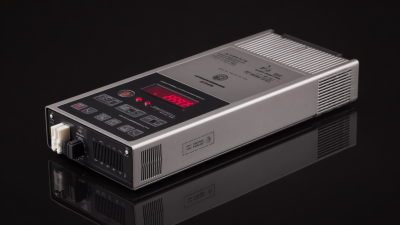
A Frequency Drive Controller is pretty much a must-have in today's industrial world. It’s what manages the speed and torque of electric motors, helping everything run smoothly. Lots of companies depend on this tech to stay efficient and get good performance out of their equipment.
Getting how a Frequency Drive Controller works can really help you optimize your operations. Basically, it tweaks the motor’s speed by changing the voltage and frequency. That means you use less energy and save money in the long run. But honestly, not everyone fully gets all the advantages it offers.
Adding a Frequency Drive Controller can make a real difference, no doubt about it. Still, you gotta make sure it’s set up right and maintained properly. Sometimes, integrating it with existing systems can be a bit tricky. So, it’s important to think through these things carefully if you want everything to go smoothly.
Definition of a Frequency Drive Controller
A frequency drive controller is a device that manages the speed and torque of electric motors. This technology allows for greater efficiency and precision in motor control. By adjusting the frequency of the power supplied to a motor, these controllers optimize performance and energy consumption.
The main function revolves around converting standard electrical power into a variable frequency. This enables the motor to run at different speeds, depending on the requirement. For example, in manufacturing, altering motor speed can save energy and reduce wear and tear on machinery. One might wonder if the implementation will complicate existing systems, but many designs integrate smoothly.
Tips: Regular maintenance can prolong the lifespan of frequency drive controllers. Check connections and settings often. Ensure the environment is suitable, as excessive dust or moisture can hinder performance. Balancing efficiency with operational needs might require ongoing adjustments and reflections on usage patterns. These small changes could lead to significant improvements over time.
Principles of Operation for Frequency Drive Controllers
Frequency drive controllers are essential in modern industrial applications. They regulate motor speed and torque by adjusting the frequency and voltage supplied to the motor. This mechanism optimizes energy consumption and enhances performance. According to a research report by MarketsandMarkets, the global variable frequency drive market is expected to reach $30 billion by 2025, reflecting the increasing importance of energy-efficient solutions.
The core principle of operation in frequency drive controllers involves Pulse Width Modulation (PWM). PWM controls the output voltage and frequency, allowing for precise speed control. It also minimizes energy wastage, addressing one of the industry’s major challenges: energy losses in motor operation. However, frequent changes in speed can lead to increased wear and mechanical stress on components, raising maintenance concerns.
These controllers interact dynamically with motor systems. They allow for smoother acceleration and deceleration, which is critical in applications such as conveyor systems and HVAC. Still, there’s a risk of harmonic distortion, which can impact power quality. Many industries are learning to balance efficiency and reliability as they adopt frequency drive technology. Addressing these concerns could drive future innovations in this field.
Key Components of a Frequency Drive Controller
A Frequency Drive Controller (FDC) is essential in modern industrial applications. Its main function is to control the speed and torque of electric motors. Understanding its key components is crucial for effective operation. One of the most important parts is the rectifier. It converts alternating current (AC) into direct current (DC). This process is foundational for the rest of the system to work efficiently.
Next, the inverter plays a critical role. It takes the DC power and converts it back into AC power. This conversion allows for precise control of motor speed. Additionally, there is a controller. This component takes inputs from sensors and sends signals to adjust the voltage and frequency. However, many users overlook maintenance, which can lead to performance drop. Regular checks are necessary to identify issues.
Another noteworthy component is the filter. It smooths out the signal to prevent electrical noise, ensuring stable operation. Users must remember that every component needs calibration. Mistakes in these adjustments can result in inefficiencies. There’s always a learning curve involved in using an FDC effectively. Continuous education on these aspects is vital for success.
What is a Frequency Drive Controller and How Does It Work? - Key Components of a Frequency Drive Controller
| Component |
Description |
Function |
| Input Rectifier |
Converts AC voltage into DC voltage |
Prepares power for the inverter to regulate |
| DC Bus |
Stores converted DC voltage |
Acts as a buffer between the rectifier and inverter |
| Inverter |
Converts DC voltage back into variable frequency AC voltage |
Controls motor speed and torque |
| Control Panel |
User interface for setting drive parameters |
Allows user input for operational adjustments |
| Feedback Device |
Monitors motor speed and position |
Provides real-time data for precise control |
| Cooling System |
Maintains optimal temperature of components |
Prevents overheating during operation |
Benefits of Using Frequency Drive Controllers in Industry
Frequency drive controllers (FDCs) are becoming essential in various industries. They help control motor speed and torque. A recent industry report noted that FDCs could reduce energy consumption by up to 50%. This reduction translates into significant cost savings for businesses. By optimizing motor operations, FDCs can improve overall efficiency.
Moreover, FDCs contribute to a more sustainable environment. The same report indicates that companies adopting these controllers can lower their carbon footprint. With rising energy costs, industries must adapt. FDCs provide a solution, yet not all facilities are using them. Some still rely on outdated systems. This reluctance could hinder progress.
In addition, the integration of FDCs can lead to improved equipment lifespan. Controlling the motor speed reduces wear and tear. However, implementing these systems isn’t always straightforward. Training staff and retrofitting older machines present challenges. Industry data shows that successful integration requires careful planning. Addressing these obstacles is crucial for maximizing the benefits of frequency drive controllers.
Applications of Frequency Drive Controllers in Various Sectors
Frequency drive controllers are crucial in various industries. They adjust the speed and torque of electric motors, leading to increased efficiency and reduced energy consumption. According to a report from MarketsandMarkets, the global market for variable frequency drives is expected to reach $11.4 billion by 2025, growing at a rate of 6.5% annually. This growth reflects a strong demand in sectors like manufacturing, HVAC, and renewable energy.
In manufacturing, frequency drive controllers optimize processes. They allow for precise control over machinery speeds, enhancing production rates while minimizing waste. In HVAC systems, they help in maintaining optimal air flow, which can lead to significant energy savings. Reports indicate that energy savings can exceed 30% when using these controllers in cooling systems. However, not all installations yield ideal results. Some facilities struggle to fully integrate these systems, leading to inefficiencies.
Renewable energy applications also benefit from frequency drive controllers. Wind and solar power plants utilize them to manage fluctuations in energy generation. A study highlighted that utilizing these controllers can improve grid stability. Yet, issues like compatibility with existing infrastructure can pose challenges. Continuous evaluation is vital for maximizing effectiveness in real-world applications.
Common Issues and Troubleshooting for Frequency Drive Controllers
Frequency drive controllers (FDCs) are essential in various industrial applications. They manage motor speed and torque, improving efficiency. However, issues can arise that impact performance. Overheating is a common problem. According to industry reports, over 40% of FDC failures stem from overheating due to inadequate cooling. This can degrade components and lead to costly downtime.
In addition to overheating, power supply issues can occur. Voltage fluctuations may cause erratic behavior in FDCs. A study indicated that around 25% of operational failures are linked to unstable power sources. Routine checks on electrical connections are vital. Performing insulation resistance tests regularly can help in identifying potential failures.
Another common issue is poor programming. Misconfigurations can lead to inefficiencies. Reports suggest that at least 15% of FDC operational problems are a result of incorrect settings. Operators must be trained adequately to ensure proper software usage. Detailed documentation and troubleshooting guides should be accessible. Keeping these resources updated helps in resolving issues swiftly.
Future Trends in Frequency Drive Controller Technology
Frequency drive controllers (FDCs)
are essential for energy efficiency in modern industrial applications. As technology advances, the trends in FDCs spotlight significant developments.
One major trend is the integration of IoT capabilities. This enables remote monitoring and control. According to a report by
Research And Markets, the global market for smart frequency drives is expected to grow by over 10% annually.
Another trend gaining traction is the use of machine learning algorithms.
These algorithms enhance the performance of FDCs by predicting maintenance needs. Reports indicate that
predictive maintenance can reduce downtime by up to 50%. Companies are now exploring the use of
cloud-based analytics to optimize energy consumption further. Such innovations reflect a
transition towards more data-driven approaches in FDC management.
However, challenges remain. The implementation of these advanced technologies can be complex and
costly. Smaller enterprises may hesitate to adopt them due to budget constraints. Additionally,
integration with legacy systems poses significant technical hurdles. Thus, a careful evaluation of costs and benefits is
crucial for successful transitions to these newer technologies. Embracing the future of frequency drive controllers requires ongoing reflection and adjustment.
Unlocking Efficiency: A Comprehensive Guide to the General VFD 55kW 380V Motor Speed Controller Inverter
In today's industrial landscape, maximizing efficiency is a priority for manufacturing operations. The General VFD 55kW 380V Motor Speed Controller Inverter serves as a key component in optimizing motor performance, leading to significant energy savings. According to a report by the International Energy Agency, the proper use of Variable Frequency Drives (VFDs) can reduce motor energy consumption by up to 50%. This is particularly relevant for large-scale operations where motors account for nearly 70% of the total electricity usage in industrial facilities.
The SCK300 model, with its robust design and lasting 18-month warranty, exemplifies the reliability needed for continuous operation. By allowing precise control of motor speed, the inverter not only enhances productivity but also extends the lifespan of motors. The importance of adaptability in motor control cannot be overstated; market research indicates that sectors implementing variable speed drives experience improved operational flexibility and reduced wear on equipment. This translates into lower maintenance costs and higher uptime—critical factors for today’s competitive manufacturing environments.
Furthermore, transitioning to a specialized inverter like the General VFD is not just an investment in technology but also a step towards sustainable practices. Reports indicate that modern VFDs can lead to less mechanical stress on motors due to smoother acceleration and deceleration, promoting a greener approach to industrial processes. Adopting such technology aligns with global efforts to decrease carbon footprints while boosting overall efficiency in operations.
FAQS
: The product aims to improve everyday tasks, making them more efficient and enjoyable.
Follow the user manual closely. Practice makes perfect; initial attempts may feel awkward.
Customization options are available. Explore settings to find what works best for you.
Prioritize essential features that align with your needs. Don't get overwhelmed by less critical functions.
Check connections and settings first. Many issues are simple and can be solved quickly.
It’s normal to encounter challenges. Reflect on the steps taken, and don't hesitate to seek help.
Conclusion
A Frequency Drive Controller is an essential device used to manage the speed and torque of electric motors by varying the frequency and voltage supplied to them. These controllers operate on the principle of converting the input power into a form that can control motor speeds effectively, utilizing key components such as rectifiers, inverters, and filters. The benefits of employing Frequency Drive Controllers in industrial settings include enhanced energy efficiency, improved process control, and increased equipment lifespan.
Frequency Drive Controllers have a wide range of applications across various sectors, from manufacturing to HVAC systems. Despite their advantages, users may encounter common issues such as overheating and communication errors, which can be addressed through proper troubleshooting techniques. As technology progresses, future trends in Frequency Drive Controller design are expected to focus on greater automation, connectivity, and integration with renewable energy sources, paving the way for smarter industrial operations.