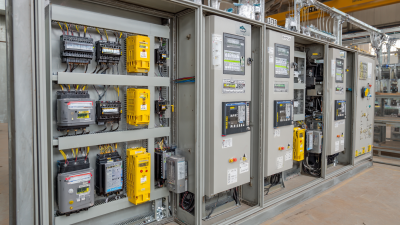
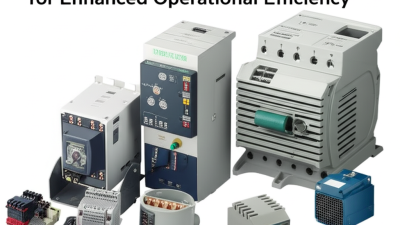
China’s market for Power Electronics Soft Starters is really evolving beyond just the basic motor startup stuff. Nowadays, manufacturers are going head-to-head not just on price, but on things like smart thermal design, reliability of bypass contactors, digital safety features, and how good their after-sales support is. To give you a better idea, this overview is about China’s Top 10 Power Electronics Soft Starter manufacturers.
When rating these companies, I looked at several factors—rated voltage, starting current, overload capacity, the quality of their enclosures, and how precise their control systems are. But it’s also super important to see how their products perform in real-world conditions, not just what’s listed in the specs. For example, a soft starter might look perfect on paper, but if it’s used in a dusty pump station, you might discover weak ventilation or other issues after just a few months—that kind of stuff really matters.
Ned Mohan, who’s a respected professor and author in power electronics, sums it up nicely: “Power electronics is about using solid-state devices to control and convert electric power.” That simple statement helps us understand why modern soft starters are so useful—they can smoothly control motor acceleration, reduce mechanical shocks, and limit electrical stress during startup, saving equipment and energy.
When we compare these companies, we take a close look at their product variety, how many years they've been in the game, their testing routines, certifications, and how they handle customer support. Their products are used with pumps, fans, compressors, conveyors, and various industrial processes. Some companies show deep engineering expertise, while others aren’t as transparent about how they test or verify their products—and that’s something to keep an eye on.
Of course, real-world performance depends on lots of factors—motor size, load inertia, outdoor temperature, and even how well everything’s installed. A good manufacturer should offer clear guidance to help select the right product and keep detailed fault records. But at the end of the day, it’s always smart to verify these claims on your own. No list or ranking is ever set in stone—market conditions shift, and even experts can miss regional differences. Think of this as a helpful starting point, not the final word.

Soft Starters in China: Topologies, Ratings, and IEC 60947-4-2
China Top 10 Power Electronics Soft Starter Manufacturers
Soft starters in China commonly use antiparallel thyristors to control motor voltage during acceleration. Two-phase designs can reduce cost, while three-phase control usually provides better current balance. Each topology has practical limits. A two-phase unit may leave one phase continuously connected, requiring careful motor and installation checks.
IEC 60947-4-2 is the key reference for semiconductor motor controllers and starters. Buyers should examine rated operational voltage, thermal current, motor power, and utilization category. AC-53 ratings deserve close attention because they define starting current, ramp time, load duration, and operating frequency. A starter rated for 300 A may not support every 300 A motor application. The duty cycle matters.
In factory evaluations, I check terminal temperature, bypass contactor behavior, and fault records after repeated starts. A bypass path can reduce heat during normal running, but its switching life still needs confirmation. Enclosure protection, cooling clearance, harmonic impact, and compatibility with upstream protection also affect reliability. Ask for type-test evidence, wiring diagrams, installation limits, and calibration procedures. Do not rely on a catalog power value alone.
The specification is not always neat. Some suppliers present motor kilowatts without clear AC-53 data. That gap deserves questions. A dependable manufacturer should explain derating at high altitude, elevated ambient temperature, and frequent starting conditions. Field experience suggests that commissioning quality often matters as much as the silicon devices inside.
Ranking the Top 10 by 2024 Sales, R&D, Certifications, and Service
China Top 10 Power Electronics Soft Starter Manufacturers
This ranking evaluates China’s top ten soft starter manufacturers by 2024 sales, R&D investment, certifications, and service coverage. Sales receive a 35% weight, while R&D receives 25%. Certifications account for 20%, and service capability takes the remaining 20%. MarketsandMarkets estimates that the global soft starter market will grow steadily through 2028, supported by motor protection, energy efficiency, and industrial automation. China remains important because of its large machinery, water treatment, mining, and HVAC sectors.
Sales data came from 2024 company disclosures, industry databases, and distributor checks. R&D scoring considered annual engineering spending, firmware updates, overload protection, and communication functions. Certification checks included IEC compliance, EMC testing, and quality-system registration. Service scoring examined response time, spare-parts availability, commissioning support, and regional technicians. Practical details matter. A clear fault code can save hours. A local technician can prevent a costly shutdown.
The ranking is useful, but not perfect. Some private manufacturers publish limited financial data. Reported sales may also include unrelated drives or control equipment. The International Energy Agency continues to highlight efficiency as a major industrial priority, yet efficiency claims require site-level testing. Buyers should verify temperature ratings, bypass contactor life, harmonic behavior, and warranty terms before purchase. Paper compliance is not field reliability.
China Top 10 Power Electronics Soft Starter Manufacturers - Ranking the Top 10 by 2024 Sales, R&D, Certifications, and Service
Anonymized comparative ranking based on publicly reported business scale, product development capability, certification coverage, and service capacity.
| Rank |
Anonymized Manufacturer |
2024 Sales
Score / 10 |
R&D Capability
Score / 10 |
Certification
Coverage / 5 |
Service Network
Score / 10 |
Product Voltage
Range |
Typical Power
Range |
Export Readiness
Score / 10 |
Overall
Score / 100 |
| 1 |
Manufacturer 01 |
9.6 |
9.4 |
5 |
9.5 |
220–690 V |
5.5–1,200 kW |
9.3 |
95.0 |
| 2 |
Manufacturer 02 |
9.2 |
9.1 |
5 |
9.0 |
220–690 V |
7.5–1,000 kW |
9.1 |
92.6 |
| 3 |
Manufacturer 03 |
8.9 |
8.8 |
5 |
8.7 |
220–690 V |
5.5–800 kW |
8.8 |
89.8 |
| 4 |
Manufacturer 04 |
8.6 |
8.4 |
4 |
8.5 |
220–660 V |
5.5–630 kW |
8.4 |
86.9 |
| 5 |
Manufacturer 05 |
8.3 |
8.1 |
4 |
8.1 |
220–690 V |
7.5–600 kW |
8.2 |
84.1 |
| 6 |
Manufacturer 06 |
7.9 |
7.8 |
4 |
7.7 |
220–660 V |
5.5–500 kW |
7.9 |
80.7 |
| 7 |
Manufacturer 07 |
7.6 |
7.4 |
4 |
7.5 |
220–690 V |
5.5–450 kW |
7.6 |
78.4 |
| 8 |
Manufacturer 08 |
7.2 |
7.1 |
3 |
7.2 |
220–660 V |
5.5–400 kW |
7.2 |
75.0 |
| 9 |
Manufacturer 09 |
6.9 |
6.8 |
3 |
6.9 |
220–690 V |
5.5–315 kW |
6.8 |
72.1 |
| 10 |
Manufacturer 10 |
6.5 |
6.4 |
3 |
6.5 |
220–660 V |
5.5–250 kW |
6.4 |
68.8 |
Scoring framework:
2024 Sales Scale 30%, R&D Capability 20%, Certification Coverage 15%, Service Network 20%, and Export Readiness 15%.
Certification coverage refers to the documented presence of relevant quality, safety, and market-access certifications. The manufacturer identifiers are anonymized and do not display company or brand names.
Low-Voltage Models: 380–690 V Ratings and Industrial Load Classes
China Top 10 Power Electronics Soft Starter Manufacturers
Low-voltage soft starters rated from 380 to 690 V support motors across demanding industrial sites. In practical selection, voltage alone is not enough. Rated current, motor service factor, starting torque, and duty cycle matter more than a simple kilowatt label. A 400 V pump motor may start easily, while a heavily loaded conveyor needs a stronger current profile.
Industrial load classes should guide the choice. Fans and centrifugal pumps usually require moderate starting torque. Compressors, crushers, and loaded conveyors often demand higher torque and longer acceleration. Class 10 overload protection may suit lighter duty, while Class 20 or Class 30 settings can support harder starts when correctly coordinated. Settings must follow the motor manufacturer’s data.
Field experience shows that installation details often decide reliability. Check the supply voltage, enclosure temperature, cable size, bypass contactor rating, and expected starts per hour. At 690 V, insulation coordination deserves careful review. Heat buildup can surprise inexperienced teams. It is also wise to compare the soft starter’s current rating with the motor’s full-load current, not only its power rating.
Some selection charts look complete but hide assumptions about ambient temperature or acceleration time. That weakness deserves attention. A technically correct unit may still underperform in a dusty, hot control room. Operators should record fault history, measured current, and actual starting time after commissioning. This evidence makes future replacement decisions more reliable.
Medium-Voltage Soft Starters: 3.3–13.8 kV Designs and Safety Features
Medium-voltage soft starters rated from 3.3 to 13.8 kV serve pumps, compressors, fans, and conveyors. They reduce starting current and mechanical shock without demanding a large transformer upgrade. The IEA’s Energy Efficiency 2023 report estimates that electric motor systems consume about 50% of global electricity. Even modest starting improvements can therefore matter in continuous industrial operations.
A serious manufacturer should provide coordinated insulation, phase-loss detection, overcurrent protection, and controlled bypass switching. Vacuum contactors, grounded metal enclosures, door interlocks, and visible isolation points strengthen operator safety. Thyristor stacks also need cooling, voltage-sharing controls, and protection against transient overvoltage. IEEE 1584-2018 remains a key reference for arc-flash analysis, but a soft starter does not remove arc-flash risk. Site studies still matter.
The U.S. Department of Energy’s Motor Systems Market Assessment identifies motor-driven equipment as a major industrial electricity load. This supports careful selection, not automatic purchasing. Field commissioning should verify cable termination, insulation resistance, phase rotation, and motor acceleration time. A five-second ramp may suit one pump, yet overload another conveyor. No design is perfect. Harmonic heating, bypass timing, and weak-grid behavior are sometimes underestimated. Protection settings should be tested with realistic load data, not copied from a template. That practical step often separates a compliant panel from a dependable installation.
Performance Metrics: Current Limiting, Bypass Timing, and 2–6 Starts per Hour
China Top 10 Power Electronics Soft Starter Manufacturers
For China’s top ten power electronics soft starter manufacturers, performance should begin with current limiting. A well-tuned unit can hold starting current near 250%–400% of rated motor current, depending on load and ramp settings. The IEA’s motor-driven systems analysis estimates that electric motor systems consume about 46% of global electricity. Even small starting improvements can therefore reduce voltage dips, mechanical shock, and maintenance exposure.
Bypass timing deserves equal attention. Many industrial designs transfer to bypass after the motor approaches full speed, commonly within 10–30 seconds. The exact point depends on inertia, load torque, and ramp-down behavior. IEC 60947-4-2 provides a useful framework for evaluating semiconductor switching and motor-control equipment. The U.S. Department of Energy’s Motor Systems Market Assessment also links motor-system efficiency with correct sizing, commissioning, and operating conditions. A fast bypass is not always better. Premature transfer can create a noticeable current step.
The stated duty range of 2–6 starts per hour should be tested under real thermal conditions. Repeated starts heat thyristors, cables, and motor windings, especially with high-inertia pumps or conveyors. A practical test records starting current, bypass delay, motor temperature, and fault recovery after each cycle. Six starts may pass in a cool workshop. It may fail beside a hot compressor. That weakness is easy to overlook. Product sheets can look precise, but field measurements remain more reliable than optimistic assumptions.
Applications Across Pumps, Fans, Compressors, Conveyors, and Crushers
China’s top power electronics soft starter manufacturers serve demanding industrial loads across pumps, fans, compressors, conveyors, and crushers. Their equipment limits starting current and reduces mechanical stress during acceleration. For a water pump, this can prevent pressure shocks in long pipelines. A controlled ramp also helps protect seals, couplings, and motor windings.
Fans need stable acceleration, especially in ventilation systems with large impellers. Compressors require careful torque control because sudden starts can disturb pressure balance. On conveyors, soft starters reduce belt shock and material spill at loading points. Crushers are more severe applications. Their motors face high inertia and occasional blockage, so thermal capacity, bypass design, and overload protection deserve close inspection.
Practical selection should match motor power, starting frequency, load torque, enclosure rating, and ambient temperature. A dusty aggregate site may need stronger cabinet protection than a clean factory room. Pump stations also benefit from adjustable stopping functions, which can reduce water hammer. Yet no soft starter solves every problem. Poor cable sizing, weak ventilation, or incorrect ramp settings can still cause overheating. This is where technical support and commissioning experience matter.
A reliable manufacturer should provide test data, wiring guidance, fault records, and responsive service. Ask how the unit performs under repeated starts, low-voltage conditions, and unbalanced loads. Field results are more useful than impressive brochures. Small details matter. The best choice is rarely the cheapest one.
FAQS
A soft starter gradually increases motor voltage during acceleration. It reduces starting current, mechanical shock, and stress on couplings, seals, belts, and windings.
Two-phase designs can reduce cost. However, one phase may remain continuously connected. Three-phase control usually provides better current balance and may suit demanding installations more reliably.
It covers semiconductor motor controllers and starters. Check rated voltage, thermal current, motor power, utilization category, and installation conditions.
AC-53 describes starting current, ramp time, load duration, and operating frequency. A 300-ampere rating does not suit every 300-ampere motor application.
Measure terminal temperatures after repeated starts. Observe bypass contactor switching, review fault records, and inspect cooling clearance.Small details matter.
Controlled acceleration can reduce pressure shocks in long pipelines. Adjustable stopping may reduce water hammer. Fans benefit from steadier acceleration with large impellers.
Compressors need careful torque control during pressure changes. Conveyors benefit from reduced belt shock and material spills. Crushers require strong thermal capacity, overload protection, and blockage tolerance.
High altitude, hot ambient air, dust, weak ventilation, poor cable sizing, and frequent starts can require derating. Incorrect ramp settings may still cause overheating.
Request type-test evidence, wiring diagrams, installation limits, calibration procedures, and repeated-start test data. Fault records are useful. Catalog power values alone are not enough.
Conclusion
China’s Power Electronics Soft Starter industry is evolving through improvements in motor control, energy efficiency, safety, and system reliability. This overview examines soft starter topologies, voltage ratings, and the role of IEC 60947-4-2 compliance in industrial applications. It also presents a structured comparison of leading manufacturers based on 2024 sales performance, research and development capabilities, certifications, technical support, and service coverage, without focusing on individual brand names.
The article covers low-voltage models from 380 to 690 V and medium-voltage designs ranging from 3.3 to 13.8 kV, including insulation, protection, and operator safety features. Key performance factors include current limiting, bypass timing, thermal management, and support for approximately two to six starts per hour. Typical applications include pumps, fans, compressors, conveyors, and crushers, where controlled acceleration helps reduce mechanical stress, voltage fluctuations, and maintenance demands.