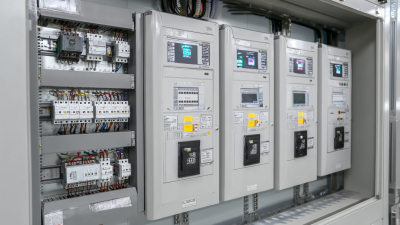
An electronic soft starter is pretty handy when it comes to controlling motor startup. Instead of jolting your equipment with a sudden rush of voltage, it gradually ramps things up, which helps cut down on electrical surges and mechanical stress. You can really notice the difference—a conveyor belt that starts off smoothly rather than jerking, or a pump that avoids those annoying pressure spikes. These devices are used pretty much everywhere in industry, but picking the right one depends on your motor, the load, how it’s operated, and the installation specifics.
In this guide, I’ve put together a list of ten well-known manufacturers—things like Siemens, ABB, Schneider Electric, Rockwell Automation, Eaton, Danfoss, WEG, AuCom, Benshaw, and Lovato Electric. Just a heads up, it’s not a ranking or anything like that. Availability and support can vary quite a bit depending on where you are, and just because a brand is familiar doesn’t automatically mean it’s the best choice for you. The little details really matter.
When comparing these options, I looked at practical stuff such as motor ratings, whether they have built-in overload protection, bypass options, control interfaces, and the support you can expect. Always double-check the latest specs from the manufacturer and make sure they line up with your specific setup—sometimes it’s easy to overlook that step.
Also, keep in mind that a soft starter isn’t a one-size-fits-all fix. If you need precise speed control, a variable frequency drive might be a better route. This overview gives you a solid starting point, but it’s no substitute for proper engineering review. Real-world setups tend to be more complicated than what you see in product charts. Ultimately, your choice should fit the actual equipment you have, the people maintaining it, and how critical it is to avoid unexpected shutdowns.
Electronic soft starters reduce the electrical and mechanical shock of starting an AC motor. Inside the unit, power semiconductors, commonly thyristors, gradually increase the voltage supplied to the motor. This creates a smoother acceleration than direct-on-line starting. Less jolting. The motor’s starting torque also falls as voltage is reduced, so the ramp must suit the driven load. A conveyor carrying material needs different settings from an unloaded pump.
The International Energy Agency’s 2011 report, Energy-Efficiency Policy Opportunities for Electric Motor-Driven Systems, estimates that motor-driven systems use about 46% of global electricity. That figure covers many applications; it does not mean a soft starter alone will cut energy use. A soft starter mainly manages startup and stopping. Once the motor reaches operating speed, a bypass contactor often carries the current. For ongoing speed control, a variable-frequency drive may be more suitable. The distinction is easy to miss.
Tips: Check the motor nameplate, load inertia, and permitted starts per hour before selecting a unit. Set acceleration time carefully: too short can cause a current surge, while too long may heat the motor. Test with the actual load. Site conditions can make a neat calculation imperfect.
Typical starting current as a multiple of a motor’s full-load current (FLA). The bars show illustrative engineering ranges; actual values depend on the motor, load, and settings.
How it works: A soft starter uses controlled semiconductor switches to ramp the voltage supplied to an AC motor during startup. This can limit inrush current and reduce mechanical stress. It is a starting aid, not a substitute for a variable-frequency drive when continuous speed control is needed.
Choosing a soft starter manufacturer means checking more than rated current and price. The U.S. Department of Energy’s Improving Motor and Drive System Performance sourcebook reports that motor-driven systems use about 70% of electricity in U.S. manufacturing. That makes correct motor matching and dependable support important. Ask for documented starting-current curves, overload protection details, and tested operating limits. A neat datasheet is not proof.
Check whether products are tested against IEC 60947-4-2, which covers semiconductor motor controllers and starters. Request evidence from tests using comparable motor loads, not just laboratory conditions. For example, a pump starting against a loaded pipe needs different torque behavior from an unloaded fan. Also compare enclosure ratings, bypass arrangements, fault diagnostics, spare-part availability, and response times for technical support. Small details matter.
The International Energy Agency’s 2011 report, Energy-Efficiency Policy Opportunities for Electric Motor-Driven Systems, estimated these systems consume 45% of global electricity. This is broad context, not a promise that a soft starter will deliver a specific saving. Ask manufacturers to explain expected performance for your duty cycle and to provide clear assumptions. If two proposals use different test conditions, their efficiency figures may not be comparable. Procurement teams can miss this. Ask for references from installations with similar motors, ambient temperatures, and start frequency; then check what failed, not only what worked.
Electronic soft starters help control motor acceleration by gradually increasing voltage, reducing the sudden mechanical shock of direct-on-line starting. Across worldwide manufacturers, product ranges differ in rated current, supply voltage, overload protection, and enclosure options. These details matter in real installations: a pump room may need protection against dry running, while a conveyor line may require adjustable ramp times and clear fault indications.
A useful comparison of the top 10 manufacturers should look beyond catalogue claims. Check whether the starter supports the motor’s duty cycle, handles frequent starts, and provides suitable bypass arrangements. Ask about thermal limits, ambient temperature, service access, and technical support in the installation region. A compact unit can save panel space, but tight wiring may make maintenance harder. Small detail. It matters.
Rankings can look precise. They rarely are. Selection depends on the application, local service coverage, documentation quality, and compatibility with existing control systems. Review verified datasheets and request clarification when specifications are unclear. For example, confirm whether a stated current rating applies to normal or heavy-duty use; the difference can affect sizing. Some comparisons overlook commissioning effort, too. That is worth questioning before treating any worldwide top-ten list as a purchasing guide.
Comparing the top electronic soft starter manufacturers worldwide is not just a matter of counting models. Product ranges may span compact units for small pumps and fans, mid-range equipment for conveyors, and high-current starters for industrial motors. Check the rated voltage and current, motor protection functions, enclosure options, and whether a bypass contactor is built in or purchased separately. The details matter.
Technology choices shape performance. Basic voltage ramps can reduce mechanical shock during startup, while current-limiting modes help control supply demand. Some models add pump-specific stopping functions, motor temperature inputs, or communication options for plant control systems. A soft starter is not a variable-frequency drive: it generally controls starting and stopping, not continuous motor speed. The labels can mislead. A tidy feature table may also hide setup effort, so compare commissioning needs and service documentation, not just specifications.
Tips: Match the starter to the motor’s full-load current and actual duty cycle. Check how often the motor starts, the load at startup, and the ambient temperature. Ask whether settings are easy to adjust at the panel. A small omission can cause delays. Availability of local technical support and replacement parts may matter as much as advanced features.
Electronic soft starters are used wherever motors must start without a harsh electrical or mechanical shock. Water utilities use them on pump stations, where a sudden start can strain pipes and couplings. Mines and cement plants apply them to conveyors, crushers, and fans. Food processors often need controlled starts for mixers and pumps. That matters.
The International Energy Agency’s 2011 report, Energy-Efficiency Policy Opportunities for Electric Motor-Driven Systems, estimates that motor-driven systems use about 46% of global electricity. The figure is broad, but it shows why motor applications deserve careful attention.
Leading manufacturers serve these sectors with different current ratings, protection functions, bypass options, and enclosure designs. A dusty quarry needs robust equipment; a compact plant room may prioritize space and straightforward commissioning. HVAC systems use soft starters for large fans and pumps, while oil and gas facilities may apply them to compressors and other heavy-duty loads.
Yet a soft starter is not a speed controller, and it does not automatically reduce a motor’s running energy use. Not everywhere. Engineers still need to check load torque, start frequency, supply capacity, and coordination with upstream protection. Selection can be less tidy than a catalog suggests, especially where old motors or changing process demands are involved.
Choosing a soft starter manufacturer begins with the motor, not the catalogue. Record the motor’s rated voltage, full-load current, starting frequency, and driven load. A pump that starts gently may need different settings from a loaded conveyor. Ask whether the proposed unit suits the actual duty cycle, not just the motor’s nameplate.
Check how clearly the manufacturer documents current ratings, overload protection, bypass operation, and thermal limits. Request wiring diagrams and installation guidance that match your panel conditions. Good technical support matters when a starter trips during commissioning or a cabinet runs hotter than expected. Ask about response times, spare parts, and staff training. Details count.
A polished specification sheet is useful, but it cannot confirm performance in every installation. Compare test data, references from similar applications, and warranty terms. If possible, review the starter with the engineer responsible for the motor and control panel. There is no universal ranking that replaces this check. Selection can be messy; a spreadsheet may overlook dust, heat, or frequent starts. Record assumptions, and revisit them when site conditions change.
It gradually increases motor voltage during startup. This reduces sudden mechanical shock. It usually controls starting and stopping, not continuous motor speed.
Match its current rating to the motor’s full-load current and actual duty cycle. Confirm whether the rating applies to normal or heavy-duty use. That distinction can change the choice.
A pump installation may need dry-running protection or a pump-specific stopping function. A conveyor may need adjustable ramp times and clear fault indications. Loads differ.
Check how often the motor starts and how much load it carries at startup. Frequent starts can affect thermal limits. Ambient temperature matters, too.
Some units include a bypass contactor; others need one purchased separately. Verify the arrangement in the datasheet. It is easy to miss.
Some models offer motor temperature inputs or communication options for control systems. Check compatibility with existing equipment before choosing. A feature list alone is not enough.
A compact unit can save panel space. But tight wiring may make service and maintenance harder. Leave practical access for technicians.
Treat rankings as a starting point, not a final decision. Compare verified datasheets, local support, replacement-part availability, and commissioning needs. I may still be overlooking an installation detail.
This guide explains what an Electronic Soft Starter is and how it gradually controls motor voltage during startup to reduce mechanical stress, electrical surges, and equipment wear. It also outlines the main criteria for evaluating manufacturers, including product reliability, operating range, protection features, ease of integration, technical support, and suitability for different motor types.
The overview compares the technologies and product ranges available across leading manufacturers without focusing on individual brand names. It considers applications in industries such as water treatment, manufacturing, HVAC, mining, and material handling, where controlled motor starting can support dependable operation. Readers will also find practical guidance for selecting a suitable manufacturer by matching starter capacity, installation requirements, environmental conditions, service expectations, and long-term operating needs to their specific project.