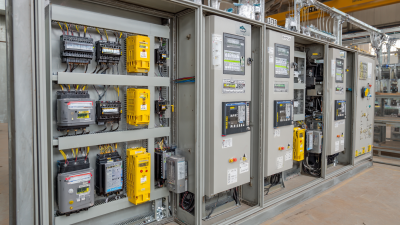
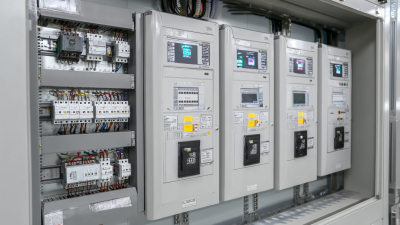
Thinking about China's top electronic soft starter suppliers? Honestly, it’s not really a question you can just answer with a simple list or ranking. An electronic soft starter does a lot — it controls how the motor ramps up, helps cut down on initial surges, and plays a key role in protecting the mechanical parts from sudden jolts. But here’s the thing: the quality of the supplier really depends on what you need, how they test their stuff, and what kind of support they offer after you buy.
In this guide, I’ll walk you through some well-known Chinese manufacturers like CHINT, SANYU, CNYH, and Gozuk. They each cater to different industrial needs and have a variety of products. So, figuring out which one’s right for you really comes down to things like motor size, enclosure style, and communication features. Don't just believe the hype though — it’s smart to compare the technical specs instead of just trusting their sales pitches. Check out rated current, overload capacity, bypass contactor design, cooling methods, and protection features. If your setup’s in a dusty workshop, pay extra attention to cabinet ventilation and IP protection—I mean, details like these really matter.
A solid evaluation shouldn't end there. You should also look at factory documentation, ask for sample testing results, and see how responsive their service team is. Make sure to request IEC test reports, wiring diagrams, fault codes, and installation guides. When it’s time to get everything up and running, have your techs measure the starting current with a clamp meter and watch how smoothly the motor starts. That’s a good sign, but it’s not the whole story. Some suppliers publish broad performance numbers without explaining the testing conditions, which isn’t very helpful. So, take that into account. It’s also a smart move to ask for references from other customers who operate similar equipment—pumps, conveyors, compressors, fans, you name it. And don’t forget to get warranty details and spare parts info in writing.
At the end of the day, the biggest supplier isn’t always the best fit. What really matters is how well they match your motor specs, environment, budget, and long-term maintenance plans. Hopefully, this guide gives you a practical foundation to compare China’s top electronic soft starter makers and helps you choose with a bit more confidence.
An electronic soft starter controls a motor’s starting voltage with semiconductor devices, usually thyristors. It raises voltage gradually instead of applying full power instantly. This reduces inrush current, belt shock, pipe pressure, and mechanical stress. A 7.5 kW pump may start more quietly, with less vibration around the coupling and base.
It is not a variable frequency drive. The motor reaches normal speed, but the soft starter does not provide continuous speed control. Many units include overload protection, phase-loss detection, ramp settings, and a bypass contactor. During commissioning, technicians should check motor current, ramp time, cabinet temperature, and repeated-start limits. Small details matter.
Supplier evaluation requires more than a low quotation. Ask for rated current, motor compatibility, thermal data, protection functions, wiring diagrams, and factory test records. Clear manuals and responsive technical support also indicate practical reliability. I have seen settings copied from another machine, causing nuisance trips. That mistake is easy to make.
Measure twice. Test under load. A soft starter may not solve every starting problem, especially with high-inertia equipment or weak power systems. The selected unit should match the motor’s duty cycle, enclosure environment, and required starting torque. Good engineering sometimes means rejecting an apparently suitable model.
An electronic soft starter controls motor starting by regulating the voltage delivered to its terminals. It commonly uses silicon-controlled rectifiers to adjust each AC waveform. The motor then receives a gradual voltage rise instead of full line voltage instantly. That matters.
During acceleration, the controller limits inrush current and reduces sudden torque. A pump may start without shaking the pipework, while a conveyor can move without jerking its load. The ramp time, initial voltage, and current limit must match the motor and application. Incorrect settings can cause slow acceleration, overheating, or nuisance trips. A soft starter cannot repair an undersized motor.
In practical commissioning, technicians check phase balance, motor insulation, load torque, and thermal protection. They also monitor current with a calibrated meter during several starts. For frequent stopping, a suitable stopping profile can reduce water hammer or mechanical stress. Many units use an internal bypass contactor after acceleration, lowering heat during normal running. However, bypass wiring and protection still require careful verification. A setting that works on an unloaded machine may fail when the hopper is full. This is where supplier expertise matters: clear manuals, tested application data, responsive technical support, and honest limits are more useful than impressive specifications. The selection should reflect duty cycle, enclosure conditions, starting frequency, and maintenance skill.
China-made soft starters now target demanding industrial applications, from pumps and conveyors to compressors. Their core feature is controlled voltage reduction through silicon-controlled rectifiers, limiting starting current and mechanical shock. The International Energy Agency estimates that electric motor systems consume about half of global electricity. Therefore, reliable motor control deserves more attention than a low purchase price.
Key features include adjustable ramp-up and ramp-down times, current limiting, motor overload protection, phase-loss detection, and built-in bypass contactors. Many units support Modbus communication, fault records, and remote status monitoring. Enclosures commonly offer practical protection against dust and moisture, but actual performance depends on the stated IP rating and installation quality. IEC 60947-4-2 provides a useful reference for low-voltage semiconductor motor controllers. Some suppliers also publish thermal capacity curves and duty-cycle data. That detail matters. A compact cabinet may fail under repeated starts.
Tips: Ask for test reports, thermal limits, starting-frequency ratings, and service response times. Compare performance at your motor’s real load, not only its rated power. Check whether local engineers can troubleshoot the controller. This is often overlooked. The best supplier is not always the cheapest one; documentation, spare parts, and application experience can reduce downtime. Still, a soft starter is not a magic energy saver. It mainly improves starting behavior, and efficiency gains may remain modest when the motor runs continuously.
China’s electronic soft starter suppliers are gaining attention as factories seek smoother motor acceleration and lower mechanical stress. The International Energy Agency reports that electric motor systems consume about 45% of global electricity. This makes starting efficiency a practical engineering issue, not a catalogue detail. Recent MarketsandMarkets research also identifies industrial automation and energy efficiency as major soft starter market drivers. Estimates vary by report.
Reliable Chinese suppliers usually provide thyristor-based control, bypass contactors, overload protection, and adjustable ramp settings. Serious procurement teams should request test records against IEC 60947-4-2, covering semiconductor motor controllers and starters. Check 380–690 V compatibility, enclosure protection, thermal limits, and fault-history storage. Ask for factory acceptance tests. See the waveform.
Supplier quality depends on more than price. A factory with calibrated current tests, traceable components, and documented burn-in procedures offers stronger evidence. Request samples under pump, compressor, and conveyor loads. Compare starting current, cabinet temperature, noise, and restart behavior. A lower quote can still become expensive after installation. No supplier is perfect. Some datasheets oversimplify duty ratings, so buyers should challenge unclear claims before signing. Independent inspection and staged orders reduce that risk.
China Top Electronic Soft Starter Suppliers?
How to Compare Chinese Soft Starter Manufacturers
The strongest comparison starts with technical fit, not the lowest quotation. Check the motor’s rated current, starting load, duty cycle, and supply voltage. A soft starter designed for a pump may not suit a crusher or conveyor. Ask for ramp-time ranges, current-limit settings, bypass contactor data, overload protection, and enclosure ratings. Demand evidence.
Request sample test reports and routine inspection records. Confirm whether the factory tests thermal performance under realistic loads, not only on an empty bench. Review compliance with relevant industrial standards, including IEC 60947-4-2 where applicable. Traceable serial numbers, controlled firmware, and documented component inspection show stronger manufacturing discipline. Photos are useful, but live factory video or an independent audit is more reliable.
Compare service before signing. A capable manufacturer should explain commissioning steps, fault codes, spare-board availability, and warranty conditions in clear English. Ask how quickly engineers respond when a unit trips during a hot afternoon shift. Sample approval matters; it can reveal loose terminals, unclear labels, or noisy cooling fans. These details are easy to miss. A low price may reflect efficient production, or weaker testing. Never assume which one. Request a pilot order, record measured starting current, and compare results with the approved specification. I would also check the supplier’s history with similar motor sizes, because impressive catalog figures can hide limited field experience.
| Comparison Dimension | Practical Benchmark | Why It Matters | Documents or Tests to Request |
|---|---|---|---|
| Applicable motor voltage | Common industrial ranges include 200–240 V, 380–415 V, 440–480 V, and 525–690 V AC, depending on the model. | The starter must match the motor supply voltage and insulation system. | Rated-voltage table, wiring diagram, nameplate sample, and dielectric or insulation test data. |
| Motor current coverage | Product families commonly cover motor currents from below 20 A to several hundred amperes; larger ratings may require a cabinet assembly. | Current rating determines compatibility, thermal performance, and enclosure size. | Continuous rated current, maximum motor kW/HP table, derating curves, and overload settings. |
| Starting method | A three-phase electronic soft starter normally controls thyristor firing angle to provide voltage-ramp or current-limit starting. | Controlled acceleration reduces mechanical shock and limits inrush current compared with direct-on-line starting. | Starting-current graphs, ramp-time range, current-limit range, and application test results. |
| Bypass operation | An integrated or external bypass contactor is commonly used after acceleration to reduce semiconductor conduction losses. | Bypass operation can lower heat generation and cabinet cooling requirements during normal running. | Bypass wiring diagram, contactor rating, transition logic, and thermal-loss information. |
| Motor protection functions | Useful functions include overload, phase loss, phase sequence, overcurrent, undercurrent, overtemperature, and excessive starting-time protection. | Protection coverage affects motor safety and reduces the need for separate monitoring devices. | Protection-function list, adjustable thresholds, trip curves, alarm history, and reset modes. |
| Applicable product standard | IEC 60947-4-2 is the principal international product standard for semiconductor motor controllers and starters. | A declared standard provides a consistent basis for electrical, thermal, and functional evaluation. | Declaration of conformity, test report, standard edition, and certificate scope matching the exact model. |
| EMC performance | Industrial equipment is commonly evaluated against applicable conducted/radiated emission and immunity requirements, such as IEC 61000-6-2 and IEC 61000-6-4 where relevant. | Poor EMC behavior can interfere with PLCs, sensors, communication networks, and safety systems. | EMC test report, installation restrictions, cable recommendations, and required suppression components. |
| Environmental rating | Panel-mounted units often use IP20 protection; higher enclosure protection normally requires a cabinet or additional enclosure. | The rating must suit dust, moisture, installation location, and the required personnel protection level. | IP rating, operating-temperature range, humidity limits, altitude derating, and cooling requirements. |
| Communication and control | Typical interfaces include digital inputs, relay outputs, analog reference signals, and optional industrial communication modules. | Interface compatibility affects integration with PLC, DCS, HMI, and remote-maintenance systems. | I/O list, terminal diagram, communication protocol manual, register map, and sample PLC program. |
| Application suitability | Pump applications may need soft stop and dry-run protection; conveyors may need torque control; compressors and crushers may require higher starting-duty capability. | The correct control profile prevents water hammer, belt shock, nuisance trips, and undersized thermal design. | Application questionnaire, motor-load data, duty-cycle calculation, and witnessed factory or site test. |
| Quality and production control | Prefer documented incoming inspection, power-semiconductor traceability, programmed aging or burn-in, and final functional testing. | Process control is more reliable than relying only on catalogue specifications. | ISO 9001 certificate, quality plan, inspection records, sample test report, and corrective-action procedure. |
| After-sales support | A qualified supplier should provide manuals, parameter backups, troubleshooting support, spare-part guidance, and a defined warranty process. | Support availability directly affects commissioning time and equipment downtime. | Warranty terms, response-time commitment, service contacts, replacement policy, and training materials. |
Note: Ratings and compliance claims should always be verified against the exact model, application duty, installation conditions, and current test documentation.
Electronic soft starters serve industries where large motors must start smoothly and reliably. Water treatment plants use them for pumps that move thousands of liters through narrow pipelines. Controlled acceleration reduces pressure surges, pipe vibration, and sudden coupling stress. Wastewater facilities also benefit from fewer electrical disturbances during repeated pump cycles.
Manufacturing plants apply soft starters to conveyors, crushers, fans, compressors, and mixers. A loaded conveyor can jerk when its motor starts directly. The result may include belt damage, product spills, or uncomfortable noise. Mining operations face harsher conditions. Dust, long cable runs, and heavy rotating equipment require careful enclosure and thermal protection. HVAC systems use soft starters for chillers, cooling towers, and large ventilation fans. Quieter starts matter in hospitals and commercial buildings.
Agricultural operations often install them on irrigation pumps, grain augers, and ventilation systems. Marine equipment may use them for seawater pumps and onboard compressors, where limited generator capacity makes current control valuable. Selection still demands judgment. Motor power alone is not enough. Engineers should check starting torque, duty cycle, ambient temperature, bypass arrangements, and overload settings. An electronic soft starter is not a universal cure. I have seen installations fail because the ramp time was copied from another machine. Commissioning should include real load testing, current measurements, and inspection after several operating cycles. Small details matter.
Before placing an order in China, inspect the supplier beyond its catalog. Ask for company registration details, factory photographs, production capacity, and recent export experience. A serious supplier should provide complete technical documents, not only a polished quotation.
Check the soft starter’s rated voltage, current range, overload capacity, bypass method, cooling design, and protection functions. Request test reports for temperature rise, insulation, vibration, and continuous operation. Ask whether each unit receives a final load test. A sample order can reveal loose terminals, unclear labels, or weak packaging. Small faults matter.
Verify the factory’s quality system and confirm which testing equipment is available onsite. If possible, arrange a live video inspection or use an independent auditor. Review warranty terms, spare parts, response times, and the process for handling defective units. Clarify packaging, delivery terms, payment stages, and inspection rights in the contract. Keep every specification in writing.
I once focused too much on price. That was a mistake. The cheaper offer required extra wiring and delayed installation. Ask technical questions before negotiating discounts. Also, check whether the supplier understands your motor’s starting load and local electrical requirements. Certificates may look convincing, but they should match the exact model ordered. A reliable supplier welcomes careful questions, although communication may still be imperfect. That is worth noticing.
It gradually raises voltage to an electric motor during startup. This reduces inrush current, vibration, and mechanical stress. Much gentler.
Semiconductor devices adjust each AC waveform before it reaches the motor. The motor receives increasing voltage instead of full power instantly. Ramp settings matter.
No. A soft starter helps control starting and stopping. It does not provide continuous speed control during normal operation.
It can reduce belt shock, pipe pressure, sudden torque, and coupling vibration. A pump may start more quietly. A conveyor may move without jerking.
Technicians should check initial voltage, ramp time, current limits, and stopping profiles. Incorrect settings may cause overheating or nuisance trips. Guessing is risky.
They should measure motor current, phase balance, insulation, load torque, and cabinet temperature. Several loaded starts provide better evidence than one unloaded test.
No. It may not suit high-inertia equipment, weak power systems, or undersized motors. A full hopper can behave differently from an empty one.
Ask for rated current, motor compatibility, thermal data, wiring diagrams, protection functions, and factory test records. Clear manuals help. Cheap quotations can hide difficult commissioning.
Many units use a bypass contactor after acceleration, reducing heat during normal running. The wiring and protection still need careful verification. Small errors remain possible.
An Electronic Soft Starter is a motor-control device that gradually increases voltage during startup, reducing inrush current, mechanical stress, vibration, and pressure surges in connected equipment. By managing acceleration and deceleration, it helps extend motor and system service life while improving operational stability. China-made soft starters commonly offer adjustable starting time, current limitation, overload protection, bypass functions, compact designs, and flexible control interfaces for different industrial applications.
This overview explains how to identify reliable electronic soft starter suppliers in China and compare manufacturers according to product quality, technical specifications, customization capability, certifications, production capacity, testing procedures, warranty terms, and after-sales support. These devices are widely used in pumps, fans, compressors, conveyors, HVAC systems, water treatment equipment, and other industrial machinery. Before placing an order, buyers should confirm voltage and power ratings, motor compatibility, environmental conditions, documentation, sample performance, delivery schedules, packaging, and communication standards.