

A 3 phase soft starter is a motor controller that reduces electrical and mechanical stress when starting three-phase AC motors. Instead of applying full voltage instantly, it gradually increases voltage during startup. This limits inrush current, prevents sudden torque shock, and helps protect pumps, fans, compressors, conveyors, and other industrial equipment.
What is a 3 Phase Soft Starter?
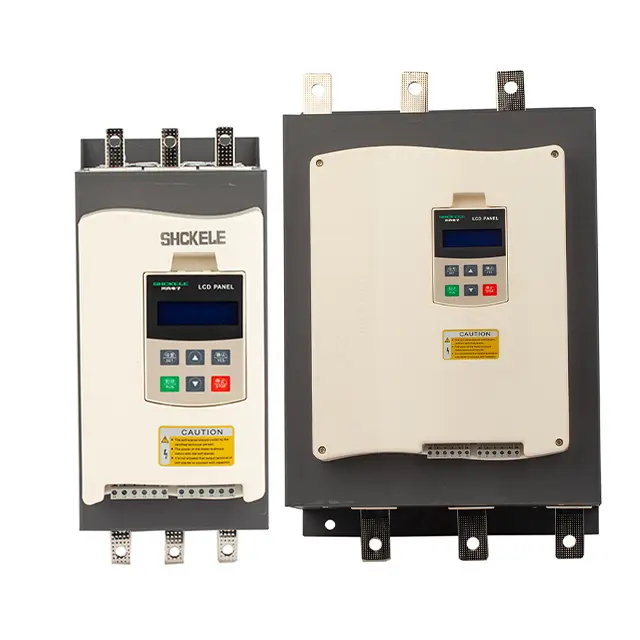
A 3 phase soft starter is an electronic device used to control the starting and stopping of three-phase AC motors. It provides smooth acceleration by regulating motor voltage, helping to avoid the high starting current and mechanical shock caused by direct-on-line starting.
Soft starters are commonly used in industrial and commercial systems where motor reliability, equipment protection, and stable operation are important.
How Does a 3 Phase Soft Starter Work?
A 3 phase soft starter controls motor voltage using thyristors, also called SCRs. During startup, the controller adjusts the thyristor firing angle so that only part of the AC waveform reaches the motor. The voltage then ramps up smoothly until the motor reaches full speed.
After the motor reaches rated speed, many soft starters switch to bypass mode through a bypass contactor. This allows current to flow directly through the contactor instead of the thyristors, reducing heat generation and improving efficiency during continuous operation.
Key Components of a 3 Phase Soft Starter
| Component | Function |
| Thyristors / SCRs | Regulate motor voltage and current during startup and stopping |
| Microprocessor Controller | Manages ramp-up, ramp-down, protection, and control logic |
| Current and Voltage Sensors | Monitor motor operating conditions in real time |
| Bypass Contactor | Switches to direct power after startup to reduce heat |
| User Interface | Allows parameter setting, status monitoring, and fault diagnosis |
| Protection Circuit | Provides overload, phase loss, overcurrent, and overtemperature protection |
Voltage Control: Phase Angle Control
Most three-phase soft starters use phase angle control. By delaying the thyristor firing angle, the controller adjusts how much voltage is applied to the motor during each AC cycle.
This method helps:
● Limit inrush current
● Provide smooth acceleration
● Reduce mechanical stress on belts, gears, couplings, and driven equipment
● Customize ramp-up and ramp-down profiles for different loads
The controller continuously monitors current, voltage, and temperature to maintain safe operation.
Main Applications of 3 Phase Soft Starters
3 Phase Soft Starters are used across many industries:
Pumps
Soft starters reduce water hammer and hydraulic shock by providing smooth acceleration and deceleration. They are widely used in water supply, wastewater treatment, and industrial pumping systems.
Compressors
Compressors often require high starting torque. A soft starter reduces electrical stress on the power system and mechanical stress on the compressor.
Mixers and Centrifuges
Soft starters help avoid vibration, overflow, and mechanical damage caused by rapid acceleration.
HVAC and Chillers
In HVAC systems, soft starters reduce peak demand during motor startup and improve power system stability.
Benefits of Using a 3 Phase Soft Starter
● Reduced mechanical stress: Smooth acceleration protects motors and driven equipment.
● Lower inrush current: Starting current is limited compared with direct-on-line starting.
● Improved motor protection: Built-in monitoring helps detect overload, phase loss, and other faults.
● Flexible configuration: Ramp time, stop time, and current limits can be adjusted for different loads.
● Energy-efficient operation: Bypass mode reduces thyristor losses during continuous running.
● Lower maintenance costs: Reduced wear on motors, belts, couplings, and gearboxes can extend service life.
How to Select a 3 Phase Soft Starter
Consider these factors when selecting a soft starter:
● Motor power and voltage: Match the soft starter to the motor’s rated power, voltage, and full-load current.
● Starting current limit: Select an appropriate current limit, typically between 200% and 400% of motor FLA.
● Starting and stopping time: Adjust ramp time based on load inertia and process requirements.
● Load type: Pumps, fans, compressors, and conveyors have different starting characteristics.
● Bypass function: Built-in bypass contactors save panel space; external contactors may be easier to maintain.
● Protection features: Look for overload, phase loss, overcurrent, short-circuit, and overtemperature protection.
● Installation environment: Consider ambient temperature, ventilation, panel space, and IP rating.
Frequently Asked Questions (FAQ) About 3 Phase Soft Starters
How does it work?
It uses thyristors to control motor voltage through phase angle control. After startup, a bypass contactor can take over to improve efficiency.
Can a soft starter control motor speed?
No. A standard soft starter only controls acceleration and deceleration. It does not provide continuous speed regulation like a VFD.
When should I choose a soft starter instead of a VFD?
Choose a soft starter for smooth starting and stopping. Choose a VFD when variable speed control is required.
Can a soft starter be used with pumps?
Yes. Soft starters are commonly used with pumps to reduce water hammer, limit starting current, and provide smooth acceleration.
Conclusion
A 3 phase soft starter is a practical solution for improving motor starting performance, reducing electrical stress, and protecting industrial equipment. By controlling voltage and current during startup, it helps minimize inrush current, lower mechanical wear, and extend motor life.
Post time: Oct-13-2026