

When an electric motor starts, it demands a sudden surge of torque and current. That startup shock can strain mechanical components, overload the electrical supply, and increase maintenance needs. A Soft Starter helps your motor accelerate smoothly, reducing stress on equipment while making your process more stable.
If you are evaluating motor control options, this guide explains what soft starters do, why they matter, which applications benefit most, and what to check before purchasing.
Why motor startup is problematic (and why it matters)
Most motor systems face the same risks at startup: high inrush current that can cause voltage dips, mechanical shock that stresses couplings, belts, and gear trains, and accelerated wear on bearings and connected equipment. Even if the motor keeps running, repeated harsh starts often lead to reliability issues and unplanned downtime.
That is why many plants and facilities choose Soft Starter technology for the acceleration phase, where the stresses are highest.
What is a Soft Starter and how does it work?
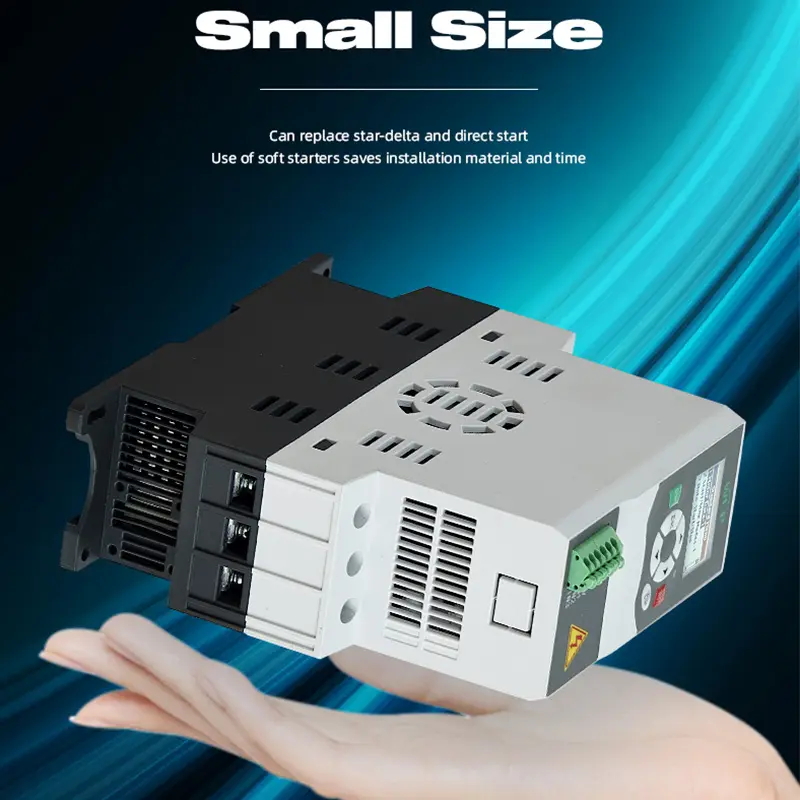
A soft starter is an electronic device that reduces the starting current of a motor and controls its acceleration. Instead of applying full power instantly, it gradually increases the voltage, allowing the motor to reach operating speed smoothly. Once up to speed, the soft starter either bypasses itself or continues auxiliary control depending on the model. This controlled startup limits inrush current, reduces voltage dips, and minimizes mechanical shock to drivetrain components. The result is a safer, gentler start that helps extend equipment life, making soft starters especially useful for pumps, conveyors, HVAC systems, mixers, and other applications where abrupt starts cause wear or power quality issues.
What are the benefits of a soft start?
A soft start is designed to reduce the impact of motor energizing on both the motor and the driven load. The most practical benefits include:
●Lower inrush current, which helps reduce electrical stress and voltage disturbances.
●Reduced mechanical stress during acceleration, helping protect couplings, shafts, belts, and gears.
●More stable process behavior, which is important for pumps, HVAC systems, mixers, and conveyors.
●Lower risk of nuisance trips caused by high starting current, improving uptime.
Over time, less shock and stress commonly means fewer maintenance events and a longer useful life for equipment.
What are soft starters for motors?
Soft starters for motors are used when controlled startup is the main goal. They are common in industrial and commercial environments such as manufacturing, water and wastewater facilities, HVAC installations, and material handling systems.
Soft starters are a strong fit when you want:
●Smooth starting for centrifugal pump and fan loads.
●Gentler acceleration for conveyors, mixers, and other torque-sensitive systems.
●Protection for mechanical components that do not handle start shock well.
A simpler alternative to VFD-based speed control when you mainly need better starting performance (instead of full continuous variable speed control).
Where a Soft Starter delivers the most value
Not every motor needs a soft starter, but many do. Consider using a Soft Starter when your application involves frequent starts, load sensitivity during acceleration, or shared electrical supplies where voltage dips could be a concern.
Typical examples include pumps, fans, mixers, conveyors, screw drives, and machines where smoother starts reduce wear and improve reliability.
Soft starter vs. VFD vs. direct-on-line: choosing the right option
If you are comparing options:
●Direct-on-line (DOL) starting is simple but often creates the highest inrush current and torque shock.
●Soft starter focus is startup and, in some cases, controlled stop. It ramps the motor for gentler acceleration, reducing electrical and mechanical stress during start.
●A VFD provides continuous speed control and more advanced process flexibility, but it is usually a step up in complexity and cost.
●If your priority is safer startup and lower electrical/mechanical stress, a soft starter typically offers excellent value, with less complexity than VFD-based speed control.
Key features to look for in an Electronic Soft Starter
When buyers search for an electronic soft starter, they usually want predictable performance and good protection. Look for:
●Adjustable acceleration (and deceleration if needed) to match your load.
●Current limiting and torque-related behavior appropriate for your motor and driven equipment.
●Built-in motor protection aligned with your requirements (for example overload and thermal protection).
●Suitable bypass strategy for your duty cycle and operating pattern.
●Correct compatibility with your wiring, control scheme, and protection philosophy.
FAQ
What is the advantage of using a soft starter for motor control?
The advantage is smoother acceleration and reduced inrush current and torque shock during startup. This helps protect motors and mechanical equipment, and it can improve power quality and process stability.
What are the benefits of a soft start?
Benefits include reduced mechanical stress on connected equipment, lower electrical stress for the motor, fewer nuisance trips tied to high starting currents, and more stable operation for pumps, fans, mixers, and conveyors.
What are soft starters for motors?
Soft starters for motors are electronic control devices that limit starting voltage and manage acceleration to achieve gentler, safer startup and to reduce startup current and torque spikes.
Summary
A Soft Starter is a practical way to improve motor control reliability by controlling acceleration, reducing inrush current, and limiting torque shock. This can extend equipment life, reduce maintenance downtime, and help your process run more predictably especially in applications with frequent starts or sensitivity to power quality and mechanical stress.
Post time: Apr-30-2026