

If you’re responsible for maintaining motors in industrial or commercial settings, you’ve likely heard concerns that soft starters might harm equipment. This is a common worry, but when used correctly, the opposite is true. In fact, soft starters are designed to protect motors. They provide a controlled ramp-up of voltage and current during startup, significantly reducing the mechanical and electrical stress that causes wear and tear.
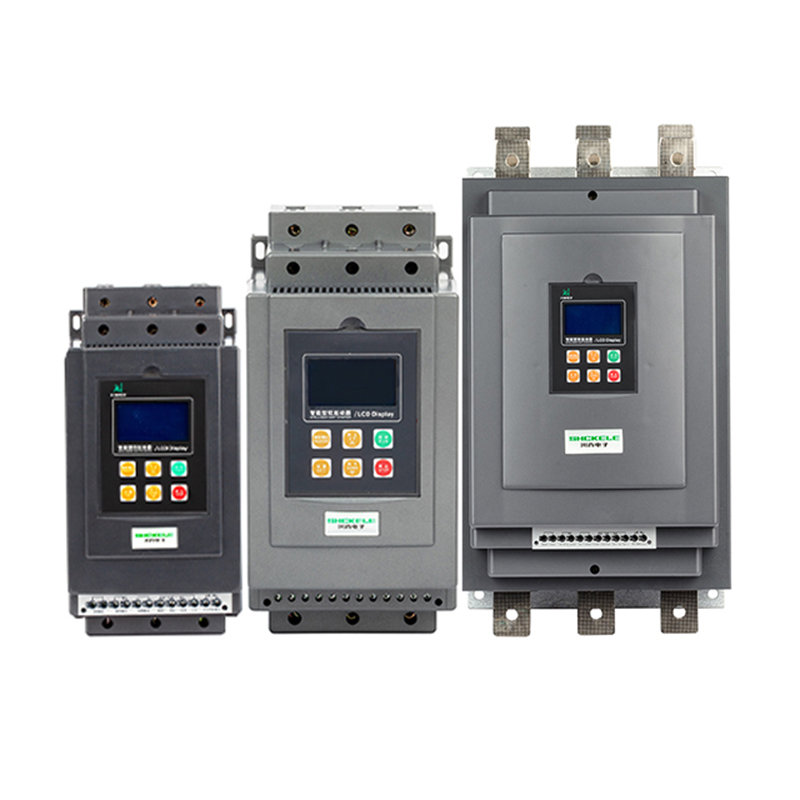
A popular and efficient version of this technology is the Bypass Soft Starter. Once the motor reaches full speed, this device bypasses the semiconductor control circuitry, allowing the motor to run directly across the line. This design eliminates continuous voltage drop and heat generation in the starter during normal operation, improving energy efficiency and reliability.
How Soft Starters Protect, Not Damage, Your Motors
The real damage to motors typically occurs during harsh, full-voltage starts. The sudden jolt of electricity (inrush current) and torque can be up to ten times the normal operating levels, leading to:
·Winding Stress: Excessive electrical and thermal stress degrades insulation over time.
·Mechanical Wear: The instant torque shock strains couplings, belts, gears, and connected loads like pumps or conveyors.
·Premature Failure: Repeated high-stress starts dramatically shorten the lifespan of bearings and other mechanical components.
By providing a smooth, controlled acceleration, a soft starter directly mitigates these issues. It extends motor life, reduces maintenance needs, and minimizes disruptive voltage dips in your power supply.
The Specific Advantages of a Bypass Soft Starter
The Bypass Soft Starter architecture offers distinct benefits for continuous-duty applications:
·Improved Efficiency: After startup, bypassing the power semiconductors eliminates their associated heat loss and voltage drop, leading to cooler operation and marginal energy savings.
·Enhanced Reliability: With the main circuitry inactive during run-time, thermal stress on the starter’s components is reduced, increasing its own operational lifespan.
·Compact and Cost-Effective: This design often allows for a more compact physical footprint and can be a cost-optimized solution for applications that don’t require speed control during operation, only during start and stop.
Ideal Applications and Proper Use
Bypass Soft Starter units are an excellent choice for applications with high inertia loads or where mechanical shock is a concern. Typical uses include:
·Conveyor belt systems
·Centrifugal pumps and fans
·Compressors
·Basic mixer drives
Crucially, a soft starter must be selected and configured properly. Damage can occur if:
·The ramp time is set too long, causing the motor to overheat during prolonged acceleration.
·The starting torque is set too low for the load, preventing the motor from ever reaching full speed.
·The unit is incorrectly sized for the motor’s current rating.
Far from causing damage, a correctly applied soft starter is a key investment in protecting your motors and mechanical systems. It transforms the most damaging part of a motor’s duty cycle—the startup—from a stressful event into a smooth, controlled process. Always ensure proper installation and parameter settings based on your specific motor and load to fully reap the long-term benefits of reduced wear and tear.
Post time: Jan-06-2026