

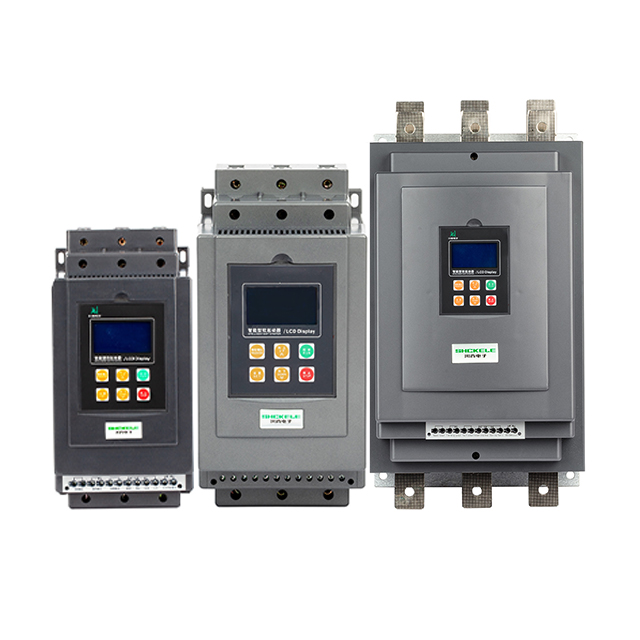
A Bypass Soft Starter is able to minimize starting current of the motor as well as mechanical wear by raising the voltage in a gradual manner. After reaching running speed, the bypass contactor switches over to AC supply directly, which means that the SCRs remain inactive.
For effective protection of motors, proper installation and initial testing are necessary. This guide demonstrates the process of how to install, configure, test, and perform troubleshooting on this kind of electronic device used for motor operation.
What Is a Bypass Soft Starter?
The soft starter regulates the voltage given to an induction motor while starting and stopping. It prevents the excessive current and impulse torque that arises due to direct-on-line starting.
A built-in bypass soft starter has a bypass contactor within the device which makes the design and wiring of the panel easier. An external bypass soft starter employs a separate contactor and is usually used for larger motors, panel upgrades, or systems that need specialized control circuits.
Pre-Installation Checklist and Safety Precautions
Prior to installation, check the motor nameplate information against the starter rating. Ensure that the motor voltage, frequency, full load current, power rating and load type match. Make sure the starter is selected based on motor current and start-up duty, not just the motor kW or HP.
The device needs to be placed in an enclosure that is clean, dry, and properly ventilated. The installation location should also be free from humidity, conductive chemicals, corrosive air, and a lot of vibration.
Installation should only be carried out by qualified electrical personnel. Before working on terminals, ensure the power supply is isolated, lockout/tagout procedures applied, voltage has been checked, and capacitors have been discharged. Observe relevant local electrical policy and safety standards.
Step-by-Step Wiring and Mounting Instructions
Mount the Starter
Unless the product manual states different, the soft starter must be positioned vertically onto a solid backplate. The recommended fasteners should be used, and heat-generating items should not be placed directly alongside the soft starter.
Connect Supply, Motor, and Ground
Make sure to connect the incoming three-phase supply to the line terminals, which are normally labeled as L1, L2, and L3. Thereafter, connect the motor leads to the output terminals, which are commonly designated as T1, T2, and T3. Use the wiring diagram provided for a particular model for this purpose.
Make sure that cables are appropriately sized, ensure that all terminals are tightened to the required torque, and connect protective earth to the grounding terminal. Bad connections can lead to overheating, voltage imbalance, and unnecessary disconnections.
Wire the Control Circuit
You should connect the start/stop buttons, PLC signals, fault relays, and remote controls according to the appropriate two-wire or three-wire control type. Ensure to maintain the control cables (which are at the low voltage level) separate from those used in the motor control system so as to avoid electrical interference. You may also need to employ shielded cable for either analog or communication signals.
Connect an External Bypass Contactor
In the case of contactor bypass soft starter, ensure that you connect the external bypass contactor in the same manner depicted in the wiring diagram approved by the electric distributor. The contactor should only close after the motor has achieved full speed; closing it before that could result in direct-on-line starting.
Choose an appropriately rated contractor and, when feasible, utilize auxiliary feedback contacts to ensure that the control system confirms successful bypass operations.
Parameter Settings and First Start-Up
Before the very first starting-up of your motor, ensure that you carefully enter the motor full-load current exhibited on the nameplate. This is critical for the overload protection purposes. After that, choose the appropriate starting mode depending on your application, for instance a voltage ramp, current limit, torque or pump control.
Set the initial voltage or starting torque sufficiently high for smooth rotation. Adjust the current limit and ramp time according to the load. Too short ramp may cause excessive mechanical shock and current, while too long ramp may overheat the motor or the starter.
In pump systems, where a gradual deceleration is crucial to prevent water hammer, soft stop must be used. Soft stop does not provide active braking for devices with high inertia.
Testing, Verification, and Common Commissioning Issues
Check supply voltage, grounding, terminal torque, motor insulation, mechanical load condition, and safety guards before energizing the system. Then start the motor and monitor acceleration, current, vibration, and noise. Make sure the motor reaches full speed within the designated start time and that the bypass contactor closes properly.
Check the electricity flow in each of the three phases. It must remain fairly comparable between the three phases and within the allowed operating range. If the rotation is not appropriate, disconnect the power completely and switch two motor phases around.
Motor Does Not Start
Verify the control voltage, wiring for starting and command, stopping circuits, emergency-stop contacts, reset of overload, and three-phase supply.
Motor Does Not Reach Full Speed
The problem could be that the limit is too low, the voltage is not enough, or the load exceeds the capacity of the driven equipment. Examine the pumps if blocked, conveyor jams, shut valves, or supply voltage reduction at starting.
Overload, Phase Loss, or Bypass Fault
Verify whether the motor current setting is equal to the value stated on the nameplate and examine the phase voltage, fuses, terminals, and mechanical load details. In case the bypass contactor does not get energized, analyze the coil voltage, control relay output, interlock switches, feedback relay contacts, and wiring procedures.
Maintenance Tips
Examine the Bypass Soft Starter regularly for any collection of dust particles, loose connections, overheating issues, malfunctioning insulation, fan problems, and wear on the contactor. Also, remember to keep a log of the parameter settings, operating current, faults experienced, and details of the commissioning process for reference during follow-up maintenance activities.
The main reasons behind successful commissioning are the correct sizing, safe wiring together with accurate parameters, and a test. The bypass soft starter which is properly installed can provide smooth startups and safe operation of the motor.
Post time: Sep-01-2026