

Starting an electric motor is not always as simple as flipping a switch. The moment a motor starts, it can pull a very high current from the power supply, often several times higher than its normal running current. That sudden rush can cause voltage drops, mechanical shock, belt slipping, pipe vibration, and extra wear on the equipment. This is where an Electronic Soft Starter becomes useful.
Instead of letting the motor jump straight to full power, a soft starter helps it start more gently. For pumps, fans, compressors, conveyors, mixers, HVAC systems, and many other industrial machines, this smoother start can mean fewer problems, less maintenance, and longer equipment life.
What Is an Electronic Soft Starter?
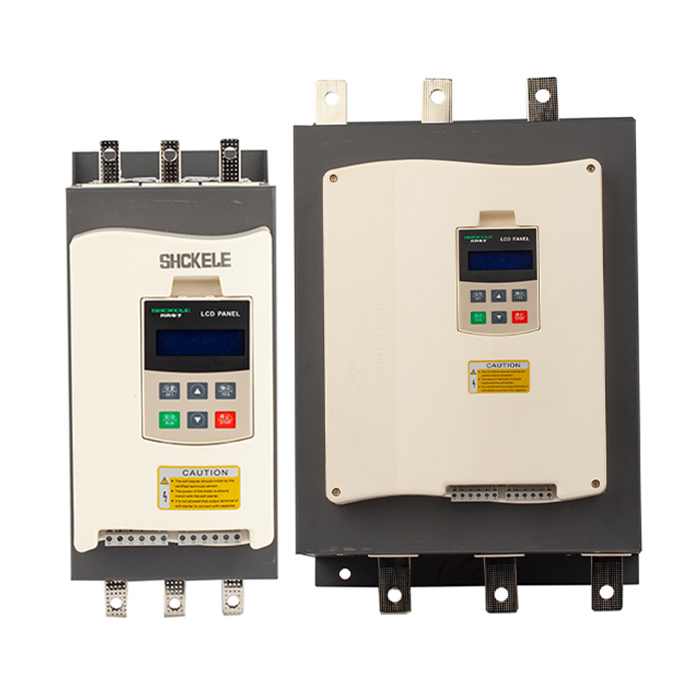
An electronic soft starter is a motor control device, mainly used with AC induction motors. Its job is to reduce the starting current and control the starting torque, so the motor does not start too aggressively.
With a direct-on-line starter, the motor receives full voltage immediately. That can be fine for some small or simple applications, but for larger motors or sensitive equipment, it can be too harsh. A motor soft starter solves this by gradually increasing the voltage to the motor during startup.
Once the motor reaches full speed, many soft starters switch to a bypass contactor. This allows the motor to run normally at full line voltage while reducing heat and energy loss inside the starter.
How Does an Electrical Soft Starter Work?
An electrical soft starter works by controlling how much voltage reaches the motor when it starts. Inside the unit, there are solid-state components, usually thyristors or SCRs. These components adjust the voltage waveform and allow the motor to receive power in a controlled way.
At the beginning, the soft starter sends a lower voltage to the motor. This keeps the starting current lower and makes the starting torque smoother. Then, as the motor begins to speed up, the soft starter gradually increases the voltage until the motor reaches full speed.
In many applications, the soft starter can also control stopping. Instead of cutting power instantly, it slowly reduces the voltage. This is especially helpful for pump systems because it can reduce water hammer, pressure shock, and stress on pipes.
Main Operating Stages of a Soft Starter
The first stage is the initial voltage setting. This decides how much voltage the motor gets at the very beginning. It needs to be strong enough to get the motor moving, but not so strong that the start becomes rough.
The second stage is the ramp-up time. This is how long the soft starter takes to increase the voltage from the initial level to full voltage. A good ramp setting helps the motor accelerate smoothly without taking too long or overheating.
The third stage is current limiting. Many soft starters let you set a maximum starting current. This is useful when the power supply is limited or when you want to avoid voltage dips in the system.
The final stage is normal running. When the motor reaches rated speed, the soft starter may switch to bypass mode. If soft stop is enabled, it will also help the motor slow down more smoothly when it is turned off.
Why Use an Electronic Soft Starter?
The biggest reason to use an Electronic Soft Starter is to reduce inrush current. A motor started directly across the line can draw five to eight times its rated current. That can put a lot of pressure on cables, transformers, switchgear, generators, and the whole electrical system.
A soft starter also helps reduce mechanical shock. A hard start can be tough on couplings, shafts, gearboxes, belts, bearings, and the driven machine. By making the start smoother, the soft starter helps protect these parts and can reduce repair costs over time.
It also makes the process more stable. Conveyors start without sudden jerks, pumps start with less hydraulic shock, and fans speed up more gradually. For many fixed-speed applications, a soft starter is a simple and cost-effective solution.
Electronic Soft Starter vs. VFD
A soft starter and a variable frequency drive, or VFD, are often compared, but they are not the same thing. A soft starter mainly controls the motor during starting and stopping. Once the motor is running at full speed, it does not adjust the speed.
A VFD, on the other hand, controls both voltage and frequency. That means it can change the motor speed during operation. If you need continuous speed control, better process adjustment, or energy savings by reducing speed, a VFD is usually the better option.
If you only need smoother starting and stopping, a soft starter is often easier to use, less expensive, and simpler to install.
Common Applications
Soft starters are used in many places where a hard start can cause problems. You can find them in pump systems, fan systems, compressors, conveyors, mixers, crushers, HVAC equipment, and industrial production lines.
For example, in a water pump system, soft start and soft stop can help reduce water hammer. In a conveyor system, a smooth start can protect belts and keep materials from shifting suddenly. In fans and blowers, soft starting reduces stress on the motor and the power supply.
What Are the Disadvantages of a Soft Starter?
A soft starter is very useful, but it is not the right answer for every situation. The main limitation is that it does not control motor speed during normal operation. Once the motor reaches full speed, it runs at the supply frequency.
Another point to keep in mind is starting torque. Because the voltage is reduced during startup, the starting torque is also reduced. For heavy-load applications, high-inertia machines, or equipment that needs strong torque from the first moment, the soft starter must be selected very carefully.
Soft starters also produce heat during starting. So proper sizing, good ventilation, bypass operation, and start frequency all matter. If the unit is too small or installed in a poorly ventilated cabinet, it may overheat or trip.
Do Soft Starters Really Work?
Yes, soft starters really do work when they are chosen and set up correctly. They are widely used because they solve real problems, such as high starting current, voltage dips, mechanical impact, and unstable startup.
That said, the result depends on the motor and the load. A fan with a light starting load is very different from a crusher, a loaded conveyor, or a high-inertia machine. Before choosing a soft starter, it is always worth checking the motor data, load type, start frequency, and working environment.
How to Choose the Right Motor Soft Starter
Before buying a soft starter, start with the basic motor information: voltage, rated current, power, frequency, and phase. The soft starter should be rated for the motor’s full-load current and the actual starting duty.
Next, look at the load. Pumps, fans, and conveyors are usually good matches for soft starters. Heavier loads may still work, but they may need a larger model or special settings. You should also consider how often the motor starts, the ambient temperature, cabinet ventilation, and whether the starter needs to communicate with a PLC or control system.
It is tempting to choose the cheapest model, but that can lead to trouble later. A correctly selected soft starter will start the motor smoothly, run more reliably, and reduce the chance of faults. A good supplier should be able to help match the soft starter to your motor, load, and site conditions.
FAQ About Electronic Soft Starters
How does an electrical soft starter work?
It slowly increases the voltage supplied to an AC motor during startup. This helps reduce starting current and torque, so the motor accelerates more smoothly instead of starting with a sudden shock.
What are the disadvantages of a soft starter?
The main disadvantages are that it does not provide continuous speed control, it reduces starting torque, and it must be sized and installed correctly. If you need variable speed control, a VFD is usually a better choice.
Do soft starters really work?
Yes. When the right soft starter is used for the right motor and load, it can reduce inrush current, protect mechanical parts, improve startup stability, and help extend equipment life.
An Electronic Soft Starter works by giving the motor a controlled, gradual start instead of applying full voltage all at once. It helps reduce electrical stress, mechanical impact, and maintenance problems in fixed-speed motor applications. If your goal is smoother starting and stopping without continuous speed control, a properly selected soft starter is a practical and cost-effective choice.
Post time: Jun-02-2026