

Electric motors are used in many different fields, and soft starters for 3 phase motors can greatly improve the operation of electric motors. A 3 phase soft starter helps make electric motor operations efficient by controlling how the motor starts and by preventing power surges from occurring. This article will discuss how a 3 phase soft starter works, the benefits it provides, and some of its applications.
What Is a 3 Phase Soft Starter?
A three-phase soft starter uses electronics to control voltage and current during the start-up of a three-phase electric motor. Whereas direct-on-line (DOL) starters are used to start motors at full voltage immediately, soft starters use a gradual voltage ramp-up to provide smooth and controlled acceleration to the motor. As a result, this will avoid sudden mechanical shocks to both the motor and its connected load.
How a 3 Phase Soft Starter Works
There are several steps involved in how the 3-phase soft starter works. During the starting of the motor, application of low voltage to the motor is the first step. The applied voltage of the motor will then increase as the speed of the motor increases until full line voltage is reached. By gradually increasing the voltage applied to the motor, the soft starter limits the inrush current to the motor which is approximately 5 to 7 times the motor’s full load current. Upon reaching full speed, the soft starter may continue in the circuit or be bypassed at which point it will function according to its design.
Benefits of Using a 3 Phase Soft Starter
Integrating a soft starter 3 phase motor into your electrical system offers numerous advantages:
1. Reduced Mechanical Stress: Soft starters allow for gradual increases in the motor’s voltage; therefore, there is less strain placed on the motor and connected devices due to starting torque, which will help to increase the life of those components.
2. Energy Efficiency: Limiting inrush currents reduce energy costs by decreasing peak demand. This is especially advantageous for applications that require frequent starting and stopping of motors.
3. Enhanced Control: Soft starters improve control for accelerating and decelerating motors. They can eliminate sudden jolts caused by ramped up or down speeds. This will increase the efficiency of the machines operated.
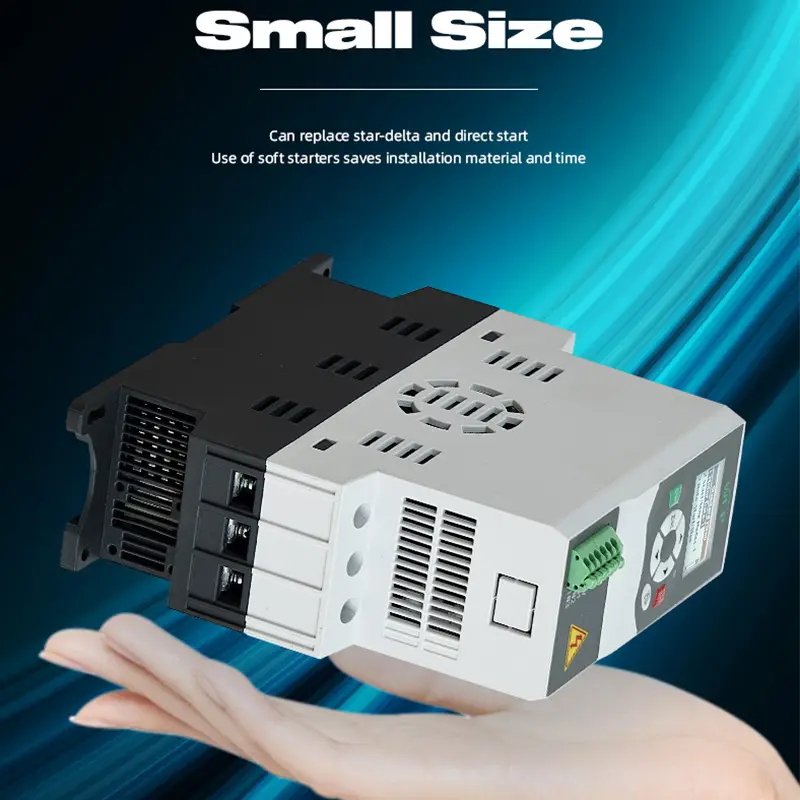
4. Compact Design: Today’s soft starters are smaller than star-delta starters or additional relays, which simplifies the installation process and helps create a smaller overall circuit footprint.
5. Protection Features: Electrical systems are usually much safer because of the integrated protection features (over-current and under-voltage) in many soft start units.
Applications of 3 Phase Soft Starters
3 phase soft starters are widely applied across various sectors including:
1. Pumps and Compressors: Gradual ramp-up reduces mechanical wear and energy costs during startup.
2. Fans and Blowers: Soft starters provide a smooth acceleration, reducing noise and vibration.
Conveyors and material handling systems improve operation efficiencies and reduce shocks created by the initial load of each operation as they progress through their operating cycles.
In the food and chemical manufacturing sectors, mixers and agitators play a critical role with respect to product uniformity through maintaining a consistent starting point.
Conclusion
To sum up, using soft starters in three-phase applications will be extremely beneficial for an efficient, controlled, and durable performance of the equipment. By reducing problems associated with direct-on-line starting of electric motors, soft starter devices provide improved performance while helping save significant amounts of both energy and maintenance costs. While many industries are looking for more intelligent and efficient means to manage their motors, using soft starters is an intelligent way to manage modern motors.
Post time: Jun-25-2026