

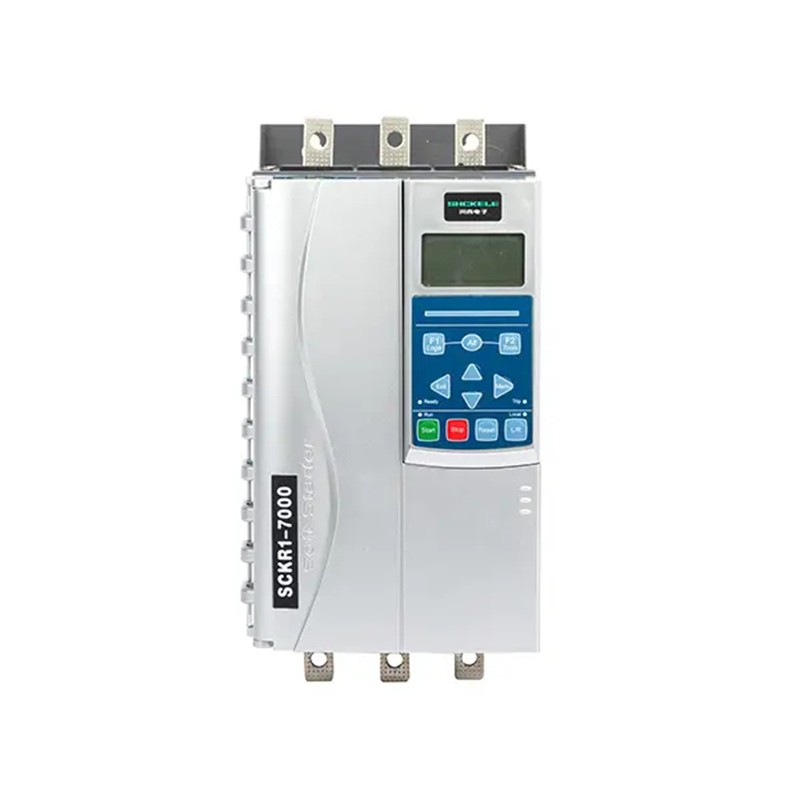
Managing industrial motors often involves tackling high inrush currents, which strain electrical systems and increase costs. While soft starters help, servicing them can disrupt operations. A Built In Bypass Soft Starter provides an integrated solution. It delivers smooth motor acceleration and incorporates an internal bypass contactor. Once the motor reaches full speed, the bypass engages, directing current straight to the motor and bypassing the starter’s electronics. This design merges soft-start protection with direct-run efficiency, enhancing reliability and reducing downtime.
How a Built In Bypass Soft Starter Works
The Built In Bypass Soft Starter starts like a conventional soft starter, smoothly increasing voltage to reduce inrush current and startup stress. When the motor reaches full speed, an internal bypass contactor closes. This creates a direct, low-resistance path around the starter‘s power electronics, diverting the main current. This bypass reduces internal heat, eliminates semiconductor voltage loss, and improves energy efficiency, while maintaining full motor protection during the critical startup phase.
Key Advantages of This Integrated Solution
Greater Reliability & Less Heat
It automatically bypasses internal electronics after startup, preventing constant heat buildup. This reduces failure risk, extends service life, and supports higher uptime in continuous-duty applications.
Higher Energy Efficiency
Once running, current flows through a low-loss bypass contactor rather than semiconductors. This cuts wasted power, lowers operating costs, and improves efficiency for motors that run for long periods.
Compact Design & Easier Installation
Combining the soft starter and bypass in one unit saves panel space, simplifies wiring, and reduces connection points. Maintenance is also easier with a single, integrated device.
Common Applications and Ideal Use Cases
This type of starter is particularly valuable in applications where motors start under load and then run continuously.
◆Water and Wastewater Management: For pumps that start against system pressure and then operate for long durations in treatment plants or distribution networks.
◆HVAC Systems: In large air-handling units, chillers, and cooling tower fans that require smooth starts and extended operation.
◆Industrial Processing: Conveyors, mixers, and compressors in manufacturing, food processing, or chemical plants.
◆Mining and Minerals: Crushers, mills, and heavy-duty conveyors that face high inertial loads during startup.
◆Oil and Gas: Applications involving pumps and fans that operate continuously in extraction or refining processes.
Selecting the Right Built In Bypass Soft Starter
Selecting the right Built In Bypass Soft Starter requires matching key specifications: the motor‘s full-load current, voltage, and horsepower, along with the specific starting torque demands of your application. Environmental factors like ambient temperature and proper enclosure rating are also vital for long-term reliability. To ensure optimal performance and protection, refer to the motor manufacturer‘s specifications or consult a qualified electrical engineer.
This integrated solution represents an intelligent advancement in motor control. It combines the protective benefits of smooth starting with the efficiency of a direct connection, addressing mechanical stress at startup and improving thermal management during continuous operation. For professionals focused on boosting system reliability, cutting energy costs, and streamlining panel design, the Built In Bypass Soft Starter offers a practical and efficient advantage.
Post time: Feb-03-2026