

If you’re working with electric motors, you’ve likely encountered the term Motor Soft Starter. So, what is a soft starter, why do we use it, and how does it improve various applications? In this guide, we’ll explore the purpose and advantages of soft starters, explaining how they work and answering key questions to help you grasp their importance. Whether you’re a plant manager, an engineer, or someone seeking to optimize motor performance, this article is for you.
What Is a Soft Starter?
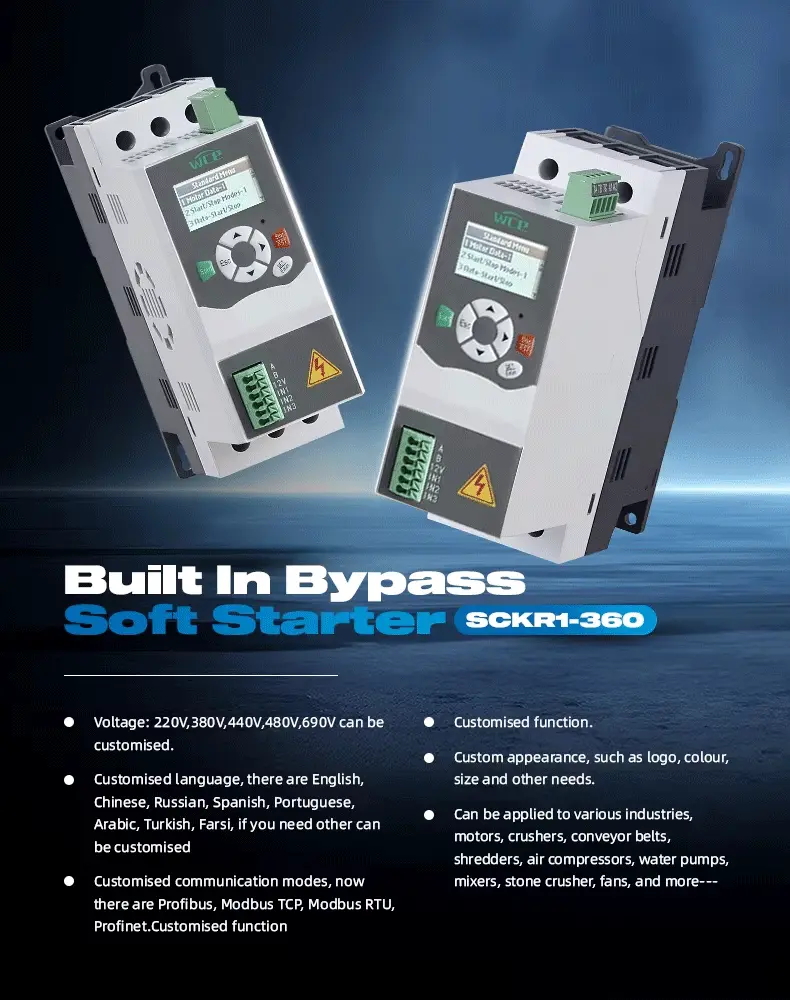
An electric motor soft starter is an electronic device that helps you start the electric motor. When the soft starter switches on, it will not instantly connect the motor to full voltage. Instead, the soft starter gradually ramps up voltage until the motor reaches its full speed. This controlled startup significantly reduces starting currents and torque, minimizing stress on the motor and the connected equipment.
Why Use a Soft Starter?
A motor soft starter is used because it allows for a gentle startup of the electric motor while protecting both the motor and the equipment it powers. High inrush currents caused by direct-on-line (DOL) starts or hard starts can lead to electrical and mechanical issues, such as:
- Voltage droop in electrical systems
- Increased mechanical loads on gearboxes, belts, and pulleys
- Premature wear of motors and associated equipment
By using a soft starter, you can minimize these risks, extend the life of your equipment, and reduce maintenance costs.
The 3 Main Functions of a Soft Starter
The soft starter performs three key functions:
- Control of the inrush current: It manages the voltage application to the motor, reducing the inrush current and preventing electrical instability.
- Reduction of mechanical stresses: Gradually ramping the voltage applied to the motor reduces wear on components and extends their operational lifespan.
- Customization of acceleration and deceleration: Adjustments can be made to the ramp rates to suit specific equipment needs and operational parameters.
For this reason, soft starters are widely used in industries such as HVAC, water treatment, and manufacturing.
Hard Start versus Soft Start – What Is the Best?
Generally, a hard start—often referred to as direct-on-line starting—applies significant torque and large currents to the motor, leading to overheating, reduced efficiency, and mechanical failure. In contrast, a soft start addresses these issues by reducing current surges, making it the preferred choice for applications where durability and energy efficiency are priorities.
The final decision between hard and soft starting depends on the specific application. Small motors with minimal starting loads may work well with hard starts. However, for larger systems or sensitive setups, the performance and longevity benefits of a soft starter are compelling.
Do Soft Starters Work?
A soft starter works effectively when used in the appropriate context. Its ability to reduce both electrical and mechanical stresses has been validated across various industries. By enabling controlled motor acceleration, a soft starter not only improves energy efficiency but also minimizes downtime caused by equipment failure. Additionally, soft starters prevent electrical spikes that can lead to costly disruptions during startup.
Benefits of a Soft Starter
Here are some key benefits of using a motor soft starter:
- Increased Energy Efficiency: Lower starting currents reduce energy waste and enhance overall operational efficiency.
- Increased Equipment Lifespan: Reduced system stresses enhance the durability of motors and associated components.
- Smoother Operation: Less vibration and noise during operation improve overall user experience.
- Customizable Settings: Soft starters allow adjustable parameters for acceleration and deceleration, making them suitable for different applications.
Applications for Soft Starters
Soft starters are indispensable in various applications requiring controlled motor acceleration. Common scenarios include:
- Industrial conveyors and assembly lines
- Pumps in water treatment facilities
- HVAC systems to regulate airflow
- Cranes and escalators to alleviate mechanical strain
- Large fans and compressors that demand controlled torque to avoid system damage
In all these examples, soft starters provide efficient, reliable performance, making them a valuable investment.
FAQ About Soft Starters
What Is the Purpose of a Soft Start?
A soft start regulates motor acceleration to control inrush currents and mechanical stresses during startup, protecting the motor and extending its life.
Which Is Better, Hard Start or Soft Start?
In most cases, a soft start is better because it reduces wear and improves efficiency. Hard starts are only suitable for applications with minimal load requirements.
Why Are Soft Starters Necessary?
Soft starters are essential to reduce mechanical stresses on motors, extend equipment life, lower maintenance costs, and enhance energy efficiency.
Do Soft Starters Really Work?
Yes, soft starters are highly effective in enhancing motor performance, reducing stresses, and ensuring reliable operation across diverse applications.
Summary
Soft starters play a vital role in improving the efficiency, reliability, and lifespan of electric motors. By controlling inrush currents and minimizing mechanical stresses, soft starters offer a practical solution for industries seeking to maintain consistent, efficient motor performance. Whether your motor drives an industrial conveyor, a water pump, or an HVAC system, a Motor Soft Starter promises both economic and operational benefits. If you’re looking to optimize equipment longevity and promote sustainable energy usage, consider investing in a soft starter today.
Post time: Apr-09-2026