

Yes, you can use a VFD as a frequency converter but only for specific applications. A Variable Frequency Drive converts fixed-frequency AC power to adjustable-frequency AC to control motor speed. While it performs frequency conversion, it is optimized for motors, not general-purpose power supply. The key question is not “can it convert frequency?” but “can it safely power my specific equipment?”
What Is a VFD and How Does It Convert Frequency?
A VFD is an electronic power conversion device mainly used to control the speed of AC motors. It changes a fixed input frequency, such as 50Hz or 60Hz, into a variable output frequency. Since the speed of an AC motor is directly related to supply frequency, adjusting frequency allows the motor to run faster or slower according to process demand.
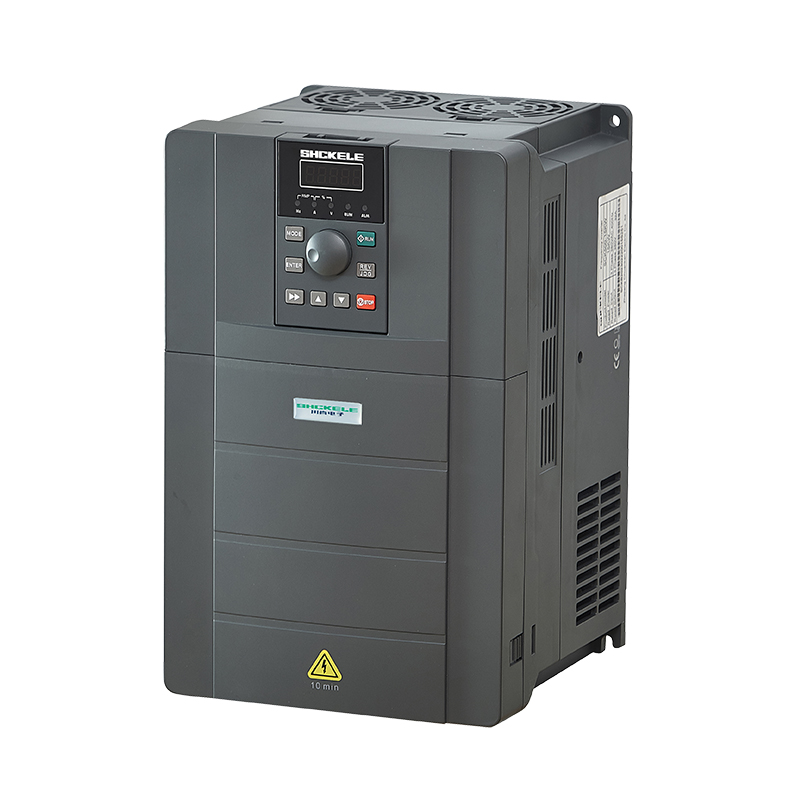
Inside a typical VFD, power conversion happens in three main stages. First, the rectifier section converts incoming AC power into DC power. Second, the DC bus stores and smooths that power. Third, the inverter section converts DC power back into AC power at the required frequency and voltage. This is why a VFD is often called a frequency inverter, AC drive, variable speed drive, or motor speed controller.
For example, if a factory has a 60Hz power supply but needs to run a motor at a lower speed, a VFD can output 30Hz, 40Hz, or any suitable frequency within its rated range. In some cases, it may also produce 50Hz output from a 60Hz supply, or 60Hz output from a 50Hz supply, as long as the voltage, current, motor type, and load requirements are compatible.
So, Can You Use a VFD as a Frequency Converter?
You can use a VFD as a frequency converter when the load is an AC motor and the purpose is motor speed or frequency control. This is one of the most common and reliable uses of VFD technology. Pumps, fans, compressors, conveyors, mixers, machine tools, and HVAC systems often use VFDs to adjust motor performance while reducing energy consumption and mechanical stress.
However, a standard VFD is not always a universal frequency converter for all electrical equipment. Many buyers assume that if a machine requires 60Hz and their local supply is 50Hz, they can simply connect it to a VFD. That may work if the machine is driven primarily by a compatible three-phase induction motor. But if the equipment includes sensitive electronics, heaters, transformers, control boards, servo systems, or multiple internal loads, a standard VFD may not provide the clean and stable power the whole machine needs.
In short, a VFD can be used as a frequency converter for motors, but it should not be treated as a general-purpose power supply unless it is specifically designed and configured for that role.
VFD vs. Frequency Converter: What Is the Difference?
The terms are often confused, but they serve distinct purposes:
| Feature | VFD (Motor Frequency Converter) | General-Purpose Frequency Converter |
| Primary Design | Exclusively for AC motor control | For complete machines/mixed loads |
| Output Waveform | PWM (optimized for motor windings) | Pure sine wave (compatible with electronics) |
| Load Compatibility | Only induction/PM motors | Motors, electronics, heaters, transformers |
| Typical Use | Speed control, energy savings | Run imported equipment, test systems |
When a VFD Is a Good Frequency Conversion Solution
A VFD is a strong solution when the application involves a single AC motor or a group of motors designed to run from an inverter output. It is especially useful where speed control, energy savings, soft starting, and process optimization are important.
Typical suitable applications include centrifugal pumps that do not always need full flow, fans that benefit from variable airflow, conveyor lines requiring adjustable speed, and industrial mixers that need different speeds for different materials. In these cases, using a VFD as a frequency control inverter can improve performance while reducing energy waste.
A VFD may also be useful when replacing mechanical throttling or damper control. Instead of running a motor at full speed and restricting the output mechanically, the VFD allows the motor to run only as fast as needed. This can lower power consumption, reduce vibration, extend equipment life, and make the system easier to automate.
When You Should Not Use a Standard VFD as a Frequency Converter
A standard VFD may not be suitable if the load is not a motor, or if the equipment requires a clean sinusoidal power source. Many VFDs output PWM waveforms, which are excellent for motor control but unsuitable for certain electrical devices. Connecting the wrong type of load can cause overheating, nuisance trips, insulation stress, malfunction, or equipment damage.
Be careful when considering a VFD for transformers, resistive heating equipment, lighting systems, laboratory instruments, UPS inputs, CNC machines with integrated electronics, medical equipment, or imported machinery that includes several internal power circuits. In these cases, a dedicated static frequency converter may be safer and more reliable.
You should also avoid assuming that frequency conversion alone solves voltage compatibility. A machine designed for 480V 60Hz may not run correctly on 380V 50Hz unless both voltage and frequency are properly addressed. Some VFDs can adjust output voltage within limits, but they cannot magically create unlimited power capacity. Input voltage, output voltage, motor current, and load torque must all be checked carefully.
Can a VFD Convert 50Hz to 60Hz?
Yes, a VFD can often convert 50Hz input to 60Hz output for a compatible AC motor. This is common when equipment originally designed for 60Hz operation is used in a region with a 50Hz power supply. The VFD rectifies the incoming power and then generates a new output frequency, so the output is not locked to the input frequency.
That said, the motor nameplate must be reviewed before operation. The motor should be suitable for the output voltage, frequency, current, insulation class, and cooling conditions. Running a motor at 60Hz may increase speed compared with 50Hz operation, which may affect bearings, driven machinery, pump curves, fan loads, and overall safety.
For constant torque loads, you must confirm the VFD and motor can deliver the required torque without overheating. For variable torque loads such as fans and pumps, increasing speed can significantly increase power demand. A small frequency change may produce a large change in load, so proper sizing is essential.
Can a VFD Convert 60Hz to 50Hz?
Yes, a VFD can also convert 60Hz input to 50Hz output for motor applications. This may be needed when running 50Hz-rated motors or machines in countries where the mains supply is 60Hz. In many cases, reducing the frequency lowers motor speed, which may be acceptable or even desirable.
However, if the motor is part of a machine with timing, cooling, or process requirements, slower speed may affect production output or mechanical performance. For example, a pump running at 50Hz instead of 60Hz will normally produce less flow and pressure. A fan will move less air. A conveyor will move more slowly. Before choosing a VFD, consider the full system impact, not just the motor nameplate.
Key Factors to Check Before Using a VFD as a Frequency Converter
To choose the right solution, start with the load. Is it only a motor, or is it a complete machine with electronics and auxiliary circuits? A VFD is designed primarily for motors. If the load includes non-motor components, consult the equipment manufacturer or use a dedicated frequency converter.
Next, confirm input and output voltage. Many VFDs are designed for specific voltage classes, such as 220V, 380V, 400V, 415V, 480V, or 690V. Some models accept single-phase input and provide three-phase output, but the output current rating must be derated correctly. If your application involves phase conversion as well as frequency conversion, sizing becomes even more important.
Current and power rating are also critical. Do not size a VFD only by motor horsepower or kilowatt rating. Check the motor full-load current and the load type. Heavy starting loads, high-inertia machines, crushers, extruders, and compressors may require a larger drive, overload capacity, braking resistor, or special control mode.
Finally, consider output waveform and cable length. Long motor cables can increase voltage spikes at the motor terminals, especially with PWM output. For sensitive installations, output reactors, dV/dt filters, or sine wave filters may be recommended. These accessories help protect the motor and improve system reliability.
Benefits of Using a VFD for Motor Frequency Control
When properly applied, a VFD offers more than frequency conversion. It gives operators precise control over motor speed and process performance. This can improve product quality, reduce mechanical shock during startup, and lower maintenance costs.
Energy savings are often one of the biggest advantages. In fan and pump systems, reducing speed even slightly can significantly reduce energy consumption. This makes VFDs attractive for HVAC, water treatment, irrigation, manufacturing, and building automation.
A VFD also supports soft start and soft stop functions. Instead of applying full voltage instantly, it ramps the motor smoothly, reducing inrush current and mechanical stress. This is especially valuable for belts, gearboxes, couplings, pumps, and systems where water hammer or sudden torque can cause damage.
Possible Limitations and Risks
Although VFDs are powerful tools, they must be applied correctly. Harmonics, electromagnetic interference, motor heating at low speed, bearing currents, and insulation stress can occur if the system is not designed properly. These issues are manageable, but they should not be ignored.
For example, a motor running at very low speed may not receive enough cooling from its shaft-mounted fan. In that case, an external cooling fan or inverter-duty motor may be needed. In applications with long cable runs, filters may be necessary to protect motor insulation. In facilities with strict power quality requirements, input reactors or harmonic mitigation solutions may be required.
This is why professional selection matters. A properly selected Frequency Inverter can deliver stable operation for years, while an incorrectly selected drive may cause repeated faults, downtime, or premature equipment failure.
How to Select the Right Frequency Inverter for Your Application
When purchasing a VFD or variable frequency inverter, provide complete application details to the supplier. A reliable supplier should ask about the motor rating, voltage, phase, current, load type, required speed range, working environment, control method, and installation conditions. If they only ask for horsepower, the selection may not be accurate enough.
For industrial applications, also consider enclosure rating, ambient temperature, altitude, communication protocols, braking requirements, safety functions, and after-sales support. A VFD installed in a dusty workshop, humid pump room, or outdoor cabinet may need additional protection. Applications requiring automation may need Modbus, Profibus, Profinet, EtherCAT, or other communication options.
If the goal is to replace a dedicated 50Hz/60Hz frequency converter, make sure the supplier understands whether the load is a motor only or a complete machine. This single detail can determine whether a VFD is appropriate or whether another power conversion product is needed.
Practical Examples
Consider a three-phase induction motor used on a conveyor. If the plant wants adjustable speed and has the correct voltage supply, a VFD is usually an excellent solution. It can vary the output frequency to control conveyor speed and provide smooth acceleration.
Now consider an imported packaging machine designed for 220V 60Hz, but the local supply is 220V 50Hz. If the entire machine includes motors, PLC controls, heaters, sensors, and internal power supplies, connecting it directly to a standard VFD may be unsafe. In this case, a dedicated frequency converter or a machine-specific electrical modification may be the better solution.
Another example is a pump motor rated for both 50Hz and 60Hz operation. A VFD can provide flexible frequency control, allowing the user to tune flow rate according to demand. This is one of the most cost-effective and technically sound uses of VFD technology.
FAQ
Is a VFD a frequency converter?
Yes, a VFD is a type of frequency converter because it changes the output frequency supplied to an AC motor. However, it is primarily a motor control device, not always a general-purpose power supply for all electrical equipment.
Can a VFD be used as an inverter?
Yes. A VFD contains an inverter stage that converts DC power into AC power with adjustable frequency and voltage. In industrial usage, terms such as VFD, inverter, AC drive, variable frequency drive, and frequency inverter are often used to describe similar motor control products.
What is another name for a frequency converter?
Another name for a frequency converter may be frequency inverter, variable frequency drive, AC drive, variable speed drive, static frequency converter, or power frequency converter. The correct term depends on the product design and application.
Is a VFD the same as a static frequency converter?
Not always. A VFD is usually designed for motor speed control, while a static frequency converter may be designed to supply stable 50Hz, 60Hz, or 400Hz power to complete equipment or mixed electrical loads. Their internal power electronics may be similar, but their output characteristics and intended uses can be different.
Can I use a VFD to power household appliances?
In most cases, no. Standard VFDs are not intended for household appliances, computers, lighting, or general plug-in equipment. They are designed mainly for AC motors. Using a VFD for unsuitable loads may damage the appliance or the drive.
Final Buying Advice
If your application is motor speed control, a VFD is often the most efficient and flexible frequency conversion solution. If your application is powering a complete machine or sensitive equipment at a different grid frequency, choose carefully and consider a dedicated frequency converter. The safest approach is to share your motor nameplate, machine specifications, input power conditions, and operating requirements with a qualified supplier before purchasing.
A VFD can be used as a frequency converter when the application matches its design purpose, especially for AC motor control. It can convert 50Hz to 60Hz, 60Hz to 50Hz, or provide a wide adjustable frequency range for pumps, fans, conveyors, compressors, and other motor-driven systems. But for non-motor loads or complete machines with sensitive electronics, a dedicated converter may be required. Choosing the right Frequency Inverter based on voltage, current, load type, environment, and control needs will help ensure safe operation, better efficiency, and long-term reliability.
Post time: Jun-04-2026