

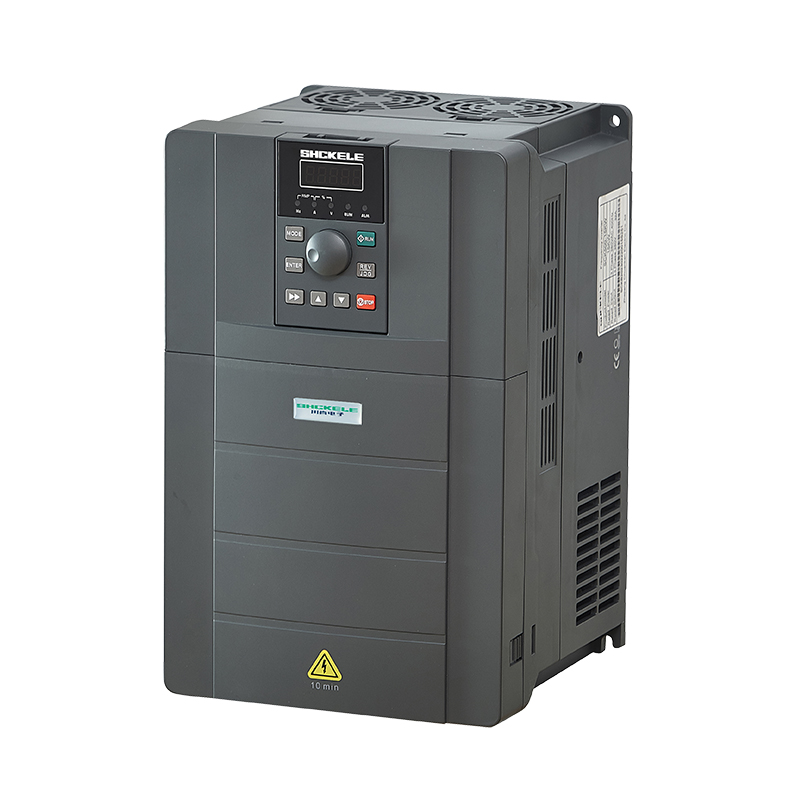
A frequency inverter — also known as a variable frequency drive or VFD — controls motor speed by adjusting the frequency and voltage of the power supplied to it. Unlike fixed-speed motors that run at full power regardless of demand, a VFD matches output to real-time needs, delivering energy savings, smoother operation, and longer equipment life across manufacturing, HVAC, water treatment, and renewable energy sectors.
How Does a Frequency Inverter Work?
At its core, a motor speed controller performs three stages:
● Rectification: Incoming AC power is converted to DC by a rectifier circuit.
● Smoothing: A capacitor bank filters the DC voltage, eliminating ripple.
● Inversion: Solid-state switches (typically IGBTs) toggle rapidly to synthesize an AC output with adjustable frequency and voltage.
This process allows the motor to run at exactly the speed the process requires — not faster, not slower — which is where the energy savings come from. Modern AC drives also include built-in protection, diagnostics, and communication protocols for factory automation integration.
Types of Frequency Inverters
Different applications call for different inverter topologies. The four most common types are:
| Type | How It Works | Best For |
| Voltage Source Inverter (VSI) | Converts DC voltage to adjustable AC | General-purpose industrial motors |
| Current Source Inverter (CSI) | Uses a DC current source for output | Heavy-duty, high-inertia loads |
| Direct Torque Control (DTC) | Directly regulates torque and flux | Precise speed/torque tasks |
| Regenerative Inverter | Returns braking energy to the grid | Cranes, elevators, downhill conveyors |
Choosing the right topology depends on your motor type, load profile, and whether energy recovery is a priority.
Key Components Inside a VFD
Understanding the internal architecture helps when specifying or troubleshooting a frequency converter:
● Rectifier: Converts AC input to DC.
● DC Bus: Stores and smooths the DC link voltage.
● Inverter Module: IGBT-based switches create the variable-frequency output.
● Control Board: Microprocessor runs the control algorithms, protection logic, and user interface.
● Enclosure & Cooling: IP-rated housing with air or liquid cooling for industrial environments.
● Connectivity: Ethernet, Modbus, Profibus ports for PLC and SCADA integration.
Where Are Frequency Inverters Used?
VFDs are deployed wherever motor speed needs to match process demand:
● Manufacturing: Precise feed rates, synchronized assembly lines, adjustable machine tools.
● HVAC: Variable air flow and water pump control — often 30–50% energy savings vs. constant-speed operation.
● Water & Wastewater: Pump and blower speed modulation for consistent pressure without hydraulic shock.
● Renewable Energy: Wind turbine generator control, solar pump optimization, hybrid system integration.
● Transport: Elevators, escalators, electric vehicle drivetrains, and marine propulsion.
Benefits of Using a VFD
● Energy savings: Motors draw only the power they need — pumps and fans see the biggest reductions (affinity laws).
● Reduced wear: Soft start/stop eliminates mechanical shock, extending bearing and coupling life.
● Process quality: Precise speed control improves product consistency in packaging, extrusion, and textile applications.
● Smart features: Auto-tuning, fault logging, remote monitoring via cloud platforms.
The main trade-off is upfront cost and the need for qualified commissioning. Quality units with harmonic filtering and comprehensive warranties offset these concerns over the lifecycle.
Frequently Asked Questions
Q: How does a VFD save energy?
A: By running motors at the exact speed the process requires instead of constant full speed. For centrifugal pumps and fans, reducing speed by 20% can cut energy use by up to 50% due to the affinity laws.
Q: Which type of inverter should I choose — VSI, CSI, or DTC?
A: VSIs are the most common and work well for general-purpose motors. CSIs suit high-inertia or high-power applications. DTC inverters deliver the fastest torque response and are ideal for precision motion control.
Q: Do I need harmonic filtering with a VFD?
A: Standard diode-rectifier VFDs generate harmonic distortion. If your facility has sensitive electronics or IEEE 519 compliance is required, add a line reactor, DC choke, or active front-end inverter.
Q: Can a VFD be used with any motor?
A: VFDs work with most standard AC induction motors. However, motors with long cable runs or high pole counts may need output filters or derating. Always check the inverter and motor manufacturer compatibility guides.
Conclusion
Frequency inverters — whether you call them VFDs, variable frequency drives, or motor speed controllers — are essential tools for anyone looking to reduce energy consumption, extend equipment life, and gain precise control over motor-driven processes. By understanding the available types, matching specifications to your application, and following best-practice installation and maintenance procedures, you can unlock significant operational savings.
Need help selecting the right inverter for your motor? Contact our technical team for a free consultation and custom sizing.
Post time: Sep-22-2026