

Maximizing energy efficiency and increasing durability of equipment are very essential in today’s industrial environment. The bypass soft starter has emerged as one of the most prominent solutions for allowing motors to start smoothly without getting damaged due to excessive current at start-up. The article will discuss the working process of a soft-starter with bypass, what parts and components it consists of, and what benefits it can provide for different industries.
What Is a Soft-Starter with Bypass?
A soft-starter that employs bypass is a sophisticated electrical device that is used for regulation of the speed of electric motors. Unlike conventional starters, which lead to large inrush currents and mechanical wear, soft-starters control the values of the voltage and current during the starting of the motor. An added advantage of the bypass function is that it disconnects the soft-starter from the circuit when the motor is operating at full speed, ensuring its effective functioning without the resistance connected with soft-starting.
How Does a Bypass Soft Starter Work?
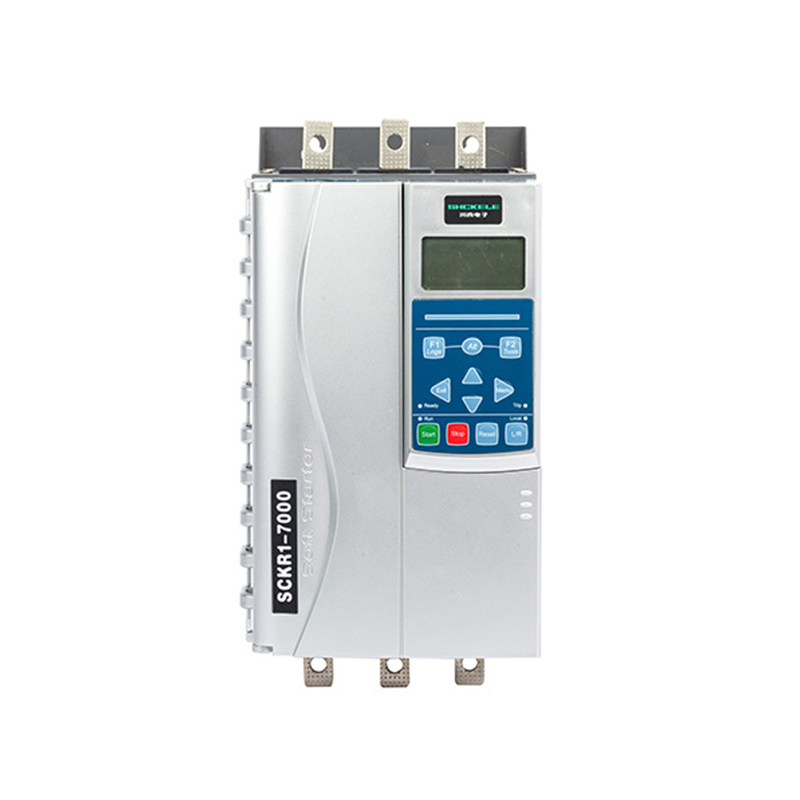
As soon as the motor is powered, the soft-starter device raises the voltage in a slow and gradual manner. Thus, the system can avoid the increase in inrush current and provides an opportunity to reduce mechanical stress on components. One of the main features of this product is that it is equipped with a huge LCD, which can display information in both Chinese and English, but it also allows choosing available languages for comfortable programming. When the motor reaches around 95% of its maximal capacity, the bypass contactor closes, which means that now, the motor can be powered directly.
Key Components of a Bypass Soft Starter System
A typical bypass soft starter system comprises several critical components:
- Control Circuit: Responsible for motors’ starting and stopping processes. Convenient use of the motor is facilitated by the remote panel.
- Bypass Contactor: Engages when the motor reaches full speed, ensuring that the soft starter is bypassed.
- Soft Starter Module: Offers the soft-start capacity for the motor, as well as advanced start-stop control features which protect the equipment.
- Protection Circuitry: Provides various motor protection capabilities that preserve the motor from damage due to overload, short circuits, and phase failure.
- Monitoring Systems: Provides complete event logging and performance monitoring functionality for improved maintenance forecasting and reliability.
Benefits of Using a Soft-Starter with Bypass
Using a soft-starter equipped with a bypass has numerous benefits when it comes to industrial processes and facilities.
1. Decreased Mechanical Wear: The soft starter helps to extend the life of both the motor and the connected machinery by reducing the mechanical impact on the motor at start-up.
2. Energy Efficiency: The bypass feature contributes to energy efficiency since the soft starter allows the motor to run free of load.
3. Developed Control: Thanks to the programmable features, it becomes possible to adjust the timing of starting and stopping based on the very particular requirements and capabilities of different kinds of tasks.
4. Enhanced Dependability of Systems: The safety functions incorporated into softstarter systems lead to stable performance, minimum downtime and maintenance expense, and dependable electrical supply to key machines.
5. Flexibility: With a variety of size ratings to choose from, a bypass soft starter can be designed to match different types of electric motors and their use, including fans, pumps, and conveyor systems.
Conclusion
To conclude, a soft starter, which has bypass capability, is an essential component of the modern industrial sector. It provides numerous advantages over just starting equipment. The enormous energy savings achieved through their installation is just one of the reasons why there are more and more of these devices being used industrially. To be able to increase their operational efficiency and save on costs in the long term, companies should become familiar with these systems and the way they work.
Post time: Jul-23-2026