

Selecting an appropriate motor starting solution contributes to better equipment lifespan, power stability, and system dependability. A soft starter cabinet integrates a soft starter with protection and control units in a single device, making it suitable for use with pumps, fans, compressors, conveyors, and other types of industrial equipment.
What Is a Soft Starter Cabinet?
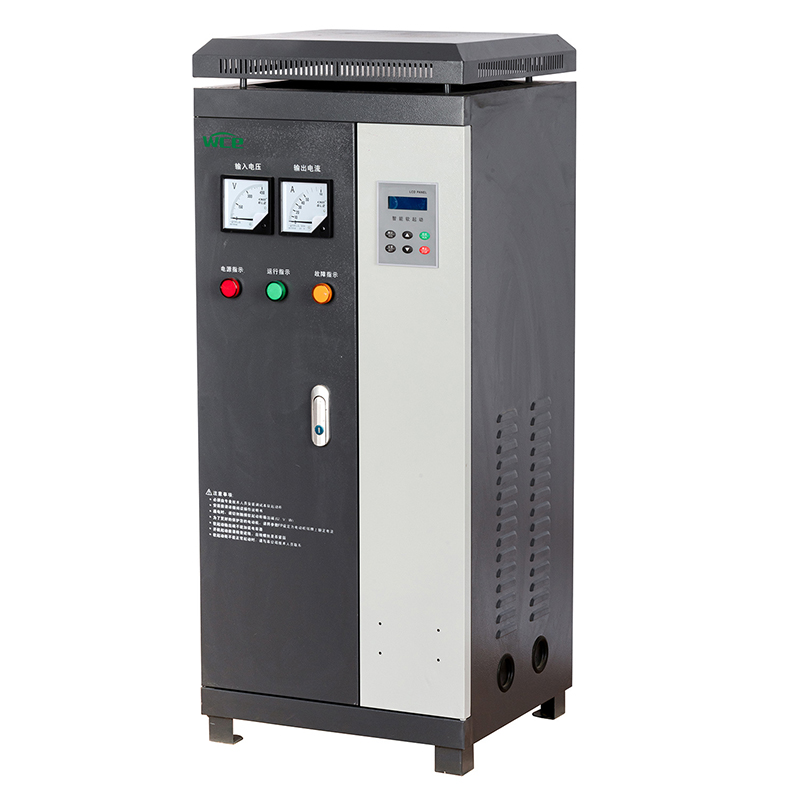
A Soft Starter Cabinet is an electrical housing used to regulate the starting and stopping process of an AC motor. Rather than applying full voltage directly, the soft starter uses an incremental voltage increase, thus minimizing voltage dips, mechanical shocks, inrush current, and damaging the belts, couplings, gears, and shafts.
An everyday cabinet can have a soft starter that operates under three phases, a circuit breaker or fuses, an isolator, a contactor, equipment for overload protection, relays that control, blocks of terminals, and a device that cools it, as well as an operator’s interface. The specific configuration will depend upon the size of the motor, load, and environment conditions.
Typical Applications
Soft starter cabinets are commonly used for:
Water and wastewater pumps, where smooth starting and stopping can help reduce water hammer.
Fans and ventilation systems in which controlled acceleration is applied so as to minimize electrical and mechanical stress.
Machines including compressors, conveyors, mixers, crushers, and many more that undergo heavy starting or mechanical shock.
Soft Starter or Variable Frequency Drive?
A soft starter is appropriate in situations when the motor usually operates at a single, constant speed and requires only facilitated initiation or termination of work. In many cases, this device is less complicated and cheaper than a variable frequency drive.
A variable frequency drive may be a good option when constant modifications of speed, exact torque control, or energy savings based on operating parameters are needed. Soft starters usually do not control motor performance after achieving its top speed.
Key Factors to Consider Before Buying
Motor and load data
Ensure that you verify the electrical specifications of the motor in the nameplate which includes voltage rating, frequency rating, power rating, full-load current rating, and its connection method. Select the soft starter based on the motor current and the duty in starting rather than the power rating alone.
Starting conditions
Take into account the number of starts per hour, time of acceleration, starting load, inertia of the motor, and torque required. Equipment used in heavy-duty applications may call for a bigger soft starter or special application rating.
Protection and bypass
The panel must consist of appropriate short-circuits protection, overload protection, protection from phase failure, and emergency stop. The bypass contactor will handle the current of the motor after starting and will help to lower the temperature of the softstart system during its regular work.
Enclosure and cooling
Find an appropriate enclosure for the installation environment. Outdoor, dusty, moist, or corrosive locations may need a superior IP or NEMA number, filtered air, a heater, or air conditioning. The availability of sufficient space and heat elimination measures is necessary for operating safely.
Control and communication
Verify if local pushbuttons in addition to remote start and stop signals need to be implemented, which may include PLC control, alarm feedback, or communication protocols like Modbus. The vendor must also give all important information such as diagrams, parts lists, testing reports, and certifications to facilitate the process.
Installation and Maintenance
The installation and commissioning of the unit must be entrusted to specialists. Prior to commissioning, the grounding, the connection of cables, the order of phase, the settings of protection, the direction of rotation of the motor, the work of bypassing, and the work of emergency stop must be checked. When servicing the equipment, it is necessary to check the contacts, the contactors, the cooling fans, filters, and the enclosure for dust and dampness, corrosion, or overheating.
Frequently Asked Questions
Is a soft starter cabinet suitable for a three-phase motor?
Yes. It must match the motor’s voltage, frequency, current, connection, and starting duty.
Can it reduce energy consumption?
The principal advantages are decreased starting current and decreased physical stress. If energy savings through speed regulation are essential, choose a variable frequency drive.
What information is needed for a quotation?
Provide the nameplate of the motor, the type of load, starting frequency, installation environment, the requirements of the enclosure, control method and the requirements for communication.
To summarize, selecting the appropriate Soft Starter Cabinet involves proper motor data, knowledge of the load, correct safeguarding, effective cooling, and compatible control functions. If you have the right specifications in place, the cabinet will give your motor a good start, reduce mechanical strain, increase reliability, and ensure safety in operation.
Post time: Sep-10-2026