

Motor soft starter technology is essential in industrial environments that demand efficient motor control, reduced mechanical stress, and reliable protection. This guide explains how soft starters work, explores their key applications, and highlights how they preserve motor integrity.
What Is a Soft Starter and How Does It Work?
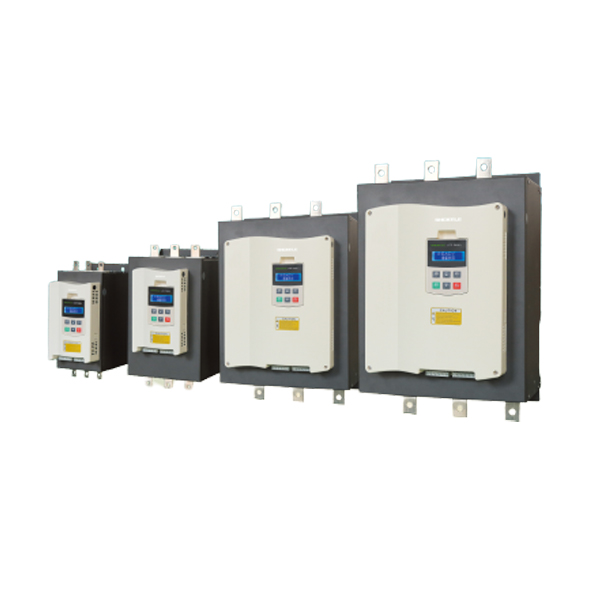
A motor soft starter is a device that regulates the voltage supplied to an electric motor during startup. Rather than applying full voltage immediately, it gradually raises the voltage to minimize electrical and mechanical stress. In contrast to direct-on-line (DOL) starting, which produces high inrush current and abrupt torque spikes, soft starters rely on power semiconductors—usually SCRs—to control the voltage ramp-up, allowing for smooth, linear acceleration monitored by built-in sensors or controllers.
After the motor reaches full speed, the soft starter is normally bypassed to enhance efficiency. Modern soft starters also provide features like adaptive control, digital interfaces, and communication protocols, enabling integration with automated systems.
Soft Starter Applications: Where and Why to Use One
Soft starters are especially valuable for motors that experience frequent starts, variable loads, or sensitive mechanical connections. Common applications include:
- Pumps and fans – Controlled acceleration prevents pipe bursts, water hammer, and excessive vibration.
- Conveyor systems – Smooth starts avoid material spillage, belt slippage, and mechanical damage.
- Compressors and mixers – Reduced torque shock minimizes wear on gears, couplings, and bearings.
- HVAC systems, elevators, and escalators – Soft starting extends equipment lifespan and improves passenger or process comfort.
In any environment where preventing abrupt mechanical shocks is important, soft starters help protect overall system performance.
How Soft Starters Protect Motors from Damage
Soft starters protect motors by limiting inrush current and controlling torque during startup. The key protection benefits include:
- Reduced mechanical stress – Controlled voltage ramping prevents sudden torque spikes that can cause shaft misalignment, coupling damage, or premature bearing failure.
- Lower electrical stress – Limiting inrush current reduces thermal stress on motor windings and upstream electrical components.
- Thermal monitoring – Many soft starters include built-in thermal protection to prevent overheating.
- Fault detection – Integrated protection features such as phase loss, overcurrent, and undervoltage detection help avoid unexpected downtime and costly repairs.
Soft Starter vs. VFD: Key Differences Explained
Both soft starters and Variable Frequency Drives (VFDs) manage motor acceleration, but their design and applications differ significantly.
| Feature | Soft Starter | VFD |
|---|---|---|
| Control method | Controls voltage during startup and stopping | Controls both voltage and frequency during operation |
| Speed control | Fixed speed (line frequency) | Variable speed and torque |
| Best use case | Smooth starts for fixed-speed motors | Continuous speed adjustment and energy savings |
| Cost | Generally more cost-effective | Higher initial cost |
| Electrical noise | Lower | Higher due to switching frequency |
In short, choose a soft starter when you need smooth starts and stops for a fixed-speed motor. Choose a VFD when you need continuous speed control, energy savings, or advanced process control.
How to Choose the Right Soft Starter
Selecting the right soft starter requires evaluating several factors:
- Motor capacity – Ensure the soft starter supports the required horsepower, voltage, and current rating.
- Start frequency – Confirm the unit can handle the number of starts per hour required by your application.
- Features – Look for bypass relays, advanced diagnostics, communication protocols, and programmable ramp profiles.
- Environmental conditions – Consider ambient temperature, humidity, dust, and enclosure rating (IP or NEMA).
- Compliance certifications – Verify that the soft starter meets relevant standards such as CE, UL, or IEC.
Proper sizing and feature selection ensure reliable performance and system scalability.
Installation and Maintenance Best Practices
Correct installation and regular maintenance help maximize the lifespan and performance of your soft starter.
Installation tips:
- Follow the manufacturer’s wiring diagram and installation guidelines
- Ensure all electrical connections are secure and properly torqued
- Calibrate ramp-up and ramp-down parameters to match your motor and load
- Integrate the soft starter with your plant control system as needed
Maintenance tips:
- Perform regular visual inspections for signs of overheating, wear, or corrosion
- Clean dust and debris from the enclosure and heat sink
- Verify thermal protection settings periodically
- Use built-in diagnostics to identify issues such as phase imbalance or overheating early
- Train operating staff on basic operation, diagnostic interpretation, and routine maintenance
Frequently Asked Questions
Q: How does a soft starter protect a motor?
A: Soft starters protect motors by limiting inrush current and controlling torque during startup. This prevents sudden mechanical stress, reduces the risk of bearing failure and shaft misalignment, and minimizes overheating. Many models also include phase loss, overcurrent, and undervoltage protection.
Q: Do soft starters save energy?
A: Soft starters primarily reduce energy waste during motor startup by limiting inrush current. However, they do not provide continuous speed control like VFDs. For applications where the motor runs at full speed most of the time, a soft starter is a cost-effective choice. For applications requiring variable speed, a VFD may offer greater energy savings.
Q: Can a soft starter be used with any motor?
A: Soft starters are compatible with most AC induction motors. However, the soft starter must be properly sized to match the motor’s horsepower, voltage, and current requirements. Always refer to the manufacturer’s specifications before installation.
Conclusion
Selecting and implementing the right motor soft starter ensures reliable motor protection, minimizes operational risk, and reduces downtime. By understanding how soft starters work, where to apply them, and how they differ from other motor controllers like VFDs, you can optimize your motor-driven processes for performance, safety, and longevity.
Post time: Sep-24-2026